

Long-toed Lapwing

Vanellus crassirostris

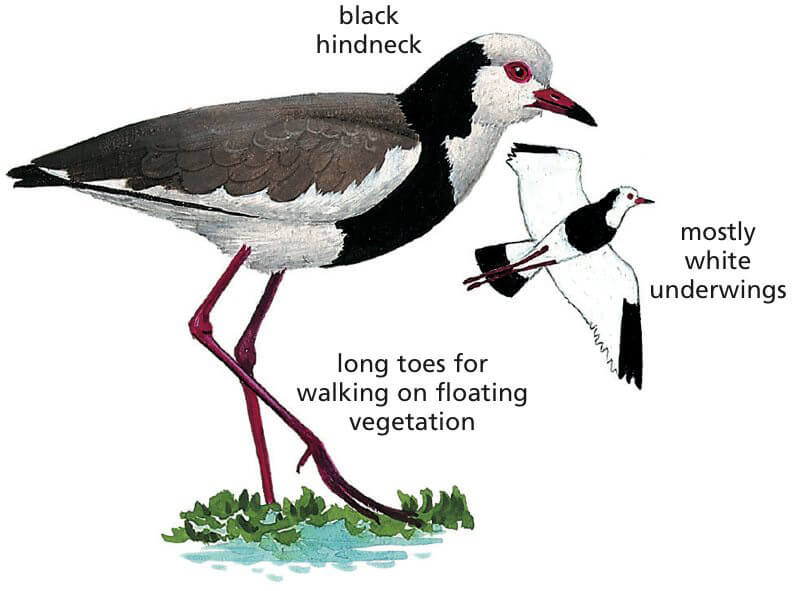
Wetland marshes and flooded areas. Red bill and legs; black-and-white head and breast; white wings in flight.
Lapwings
LC
Not Endemic
Long-toed Lapwing Newman's Birds

Description

Uncommon, localised resident. Striking pied appearance: white front half of head, neck and upper breast contrast with black nape, rear neck and breast-band. Very long toes. In flight reveals mostly white underwings. The call is ‘wheet’ and, in flight, a clicking ‘kick-k-k-kick-k-k-k’. Mostly solitary on large rivers and backwaters, lakes and floodplains; feeds while walking on floating vegetation.

Quick Facts

size

Size

30 cm - M

behaviour

Names

A: Witvlerkkiewiet
Ss: Lekekeruane La Lepheosweu
G: Langzehenkiebitz

Bird Family

Long-legged terrestrial birds with characteristically black, white and brown colouring. Usually found in pairs or small groups, favouring short grassland areas never far from fresh water. Lapwings breed during the winter season, laying their well camouflaged eggs into a shallow scrape on the ground, which they aggressively and noisily defend from humans and other predators.


Black & White
Wetlands

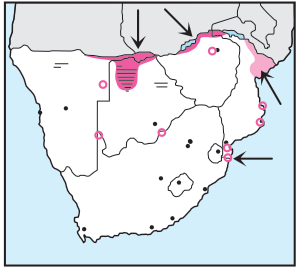
Distribution

Gallery

behaviour

Behaviour

Breeding

Breeding

Habitat

Habitat

Mostly solitary on large rivers and backwaters, lakes and floodplains; feeds while walking on floating vegetation.


behaviour

Best Locations

0 Cart