

Little Tern

Sternula albifrons

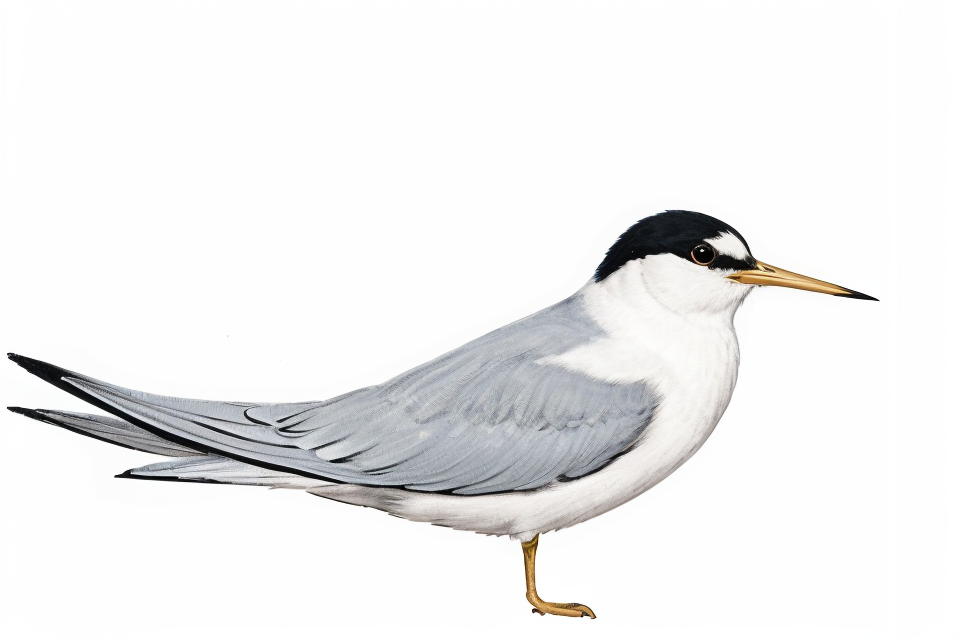
Coastal shores, found in summer in non-breeding plumage. Grey upperbody apart from mottled black cap with white forehead. In non-breeding black legs and bill, in breeding yellow.
Terns
LC
Not Endemic
Little Tern AI

Description

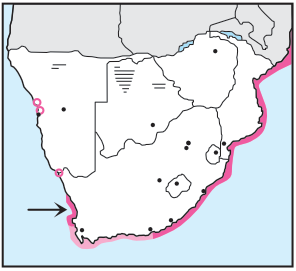
Non-breeding summer visitor. With [Damara Tern], the smallest tern in the region. In breeding plumage distinguished from Damara Tern by well-defined white forehead extending behind the eye, bright yellow legs and black-tipped yellow bill; in non-breeding and immature plumage, by shorter black bill, adults retain yellowish-orange in legs, and darker grey back, immature has dark chevrons on mantle; in flight by thin dark leading edge of wings, which contrasts with pale secondaries. Has very fast wing beats and frequently hovers when feeding. Small flocks mostly on the east coast. Breeds eastern Europe and Asia wintering across the west and east African and Indian coastlines. Common along east and southern Cape coastlines.

Quick Facts

size

Size

22-24 cm - M

behaviour

Names

A: Kliensterretjie

Bird Family

More slender, more agile than gulls and, in most species, with deeply forked tails. The majority feed at sea, plunge-diving for fish. A few, such as the marsh terns, feed mainly on insects caught in dipping flight or plucked from the surface of inland ponds, lakes and rivers. Calls are mostly similar and rather nondescript, typically ‘kee-vit' or ‘krit'.


Black & White
Forest

Distribution

Gallery

Little Tern AI
behaviour

Behaviour

Breeding

Breeding

Habitat

Habitat

Breeds eastern Europe and Asia wintering across the west and east African and Indian coastlines.


behaviour

Best Locations

0 Cart