

Levaillant’s Cisticola

Cisticola tinniens

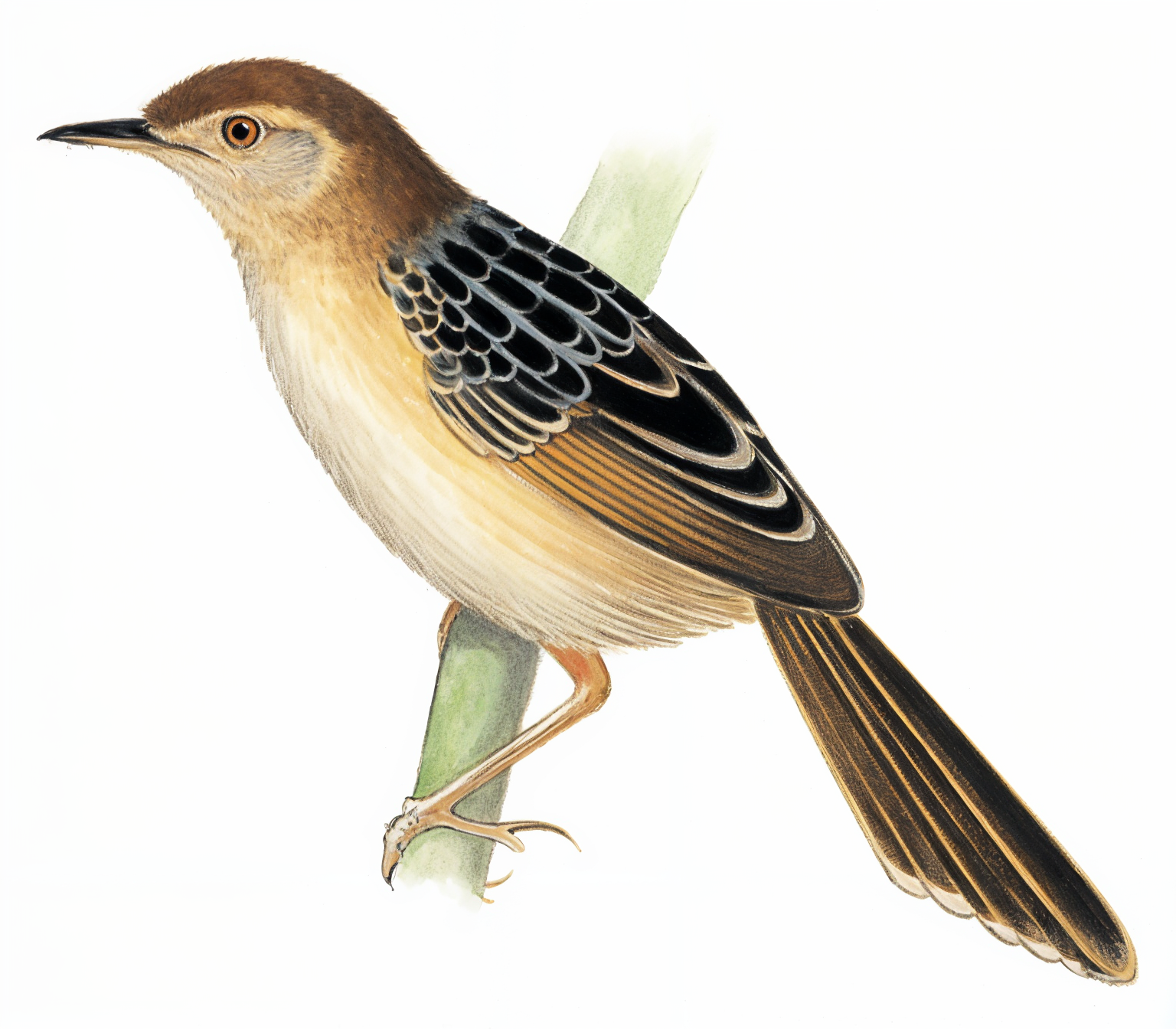
Reedbeds and water side grass. Dark brown above with black; pale below; face, flanks and breast washed rufous.
Cisticolas
LC
Not Endemic
Levaillant s Cisticola AI

Description

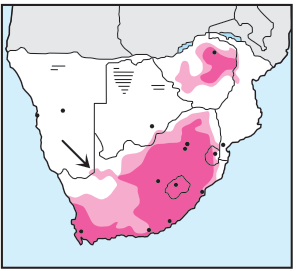
Common resident. Superficially similar to [Rufous-winged Cisticola] in having a black back and rufous crown, but confusion is unlikely since there is very little overlap in the ranges of the two species. Common pond and streamside cisticola frequenting waterside sedges and the edges of reed beds; seldom enters reed beds. Very rarely also found in tall, dry grassland away from water. Perches conspicuously and sings ‘chi-chi-chirrrueee’, the first two notes almost inaudible, the final phrase loud; also has a plaintive ‘dzwee, dzwee, dzwee’ alarm call.

Quick Facts

size

Size

12-13 cm - S

behaviour

Names

A: Vleitinktinkie
Z: umdokwe
G: Uferzistensänger

Bird Family

Small, closely similar, brown grass-warblers. There are often subtle differences between sexes and breeding and non-breeding plumages; tail lengths differ also. They are best identified by song, habitat preference and behaviour, as plumage differences are difficult to identify in the field. Territorial behaviour common to the very small ‘cloud' cisticolas is an aerial cruise accompanied by continuous singing by the males. They rise high into the air with rapidly whirring wings, often out of sight, and then cruise about singing, while some species make audible wing-snaps. The descent is a near-vertical plunge, but they check just above the grass and fly level briefly before dropping down. In some species the descent is accompanied by wing-snaps. (Cf. 'cloud' cisticolas: Pale-crowned, Zitting, Desert, Cloud and Wing-snapping Cisticolas.)


Dark Brown
Wetlands

Distribution

Gallery

behaviour

Behaviour

Breeding

Breeding

Habitat

Habitat

behaviour

Best Locations

0 Cart