
102 cm - VL

A: Kleinflamink
Z: ukholwasomncane
Ss: Mmamolalana E Monyenyane
G: Zwergflamingo

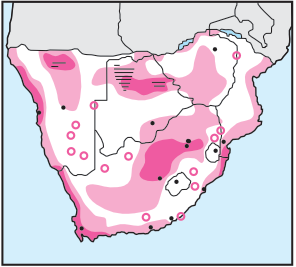
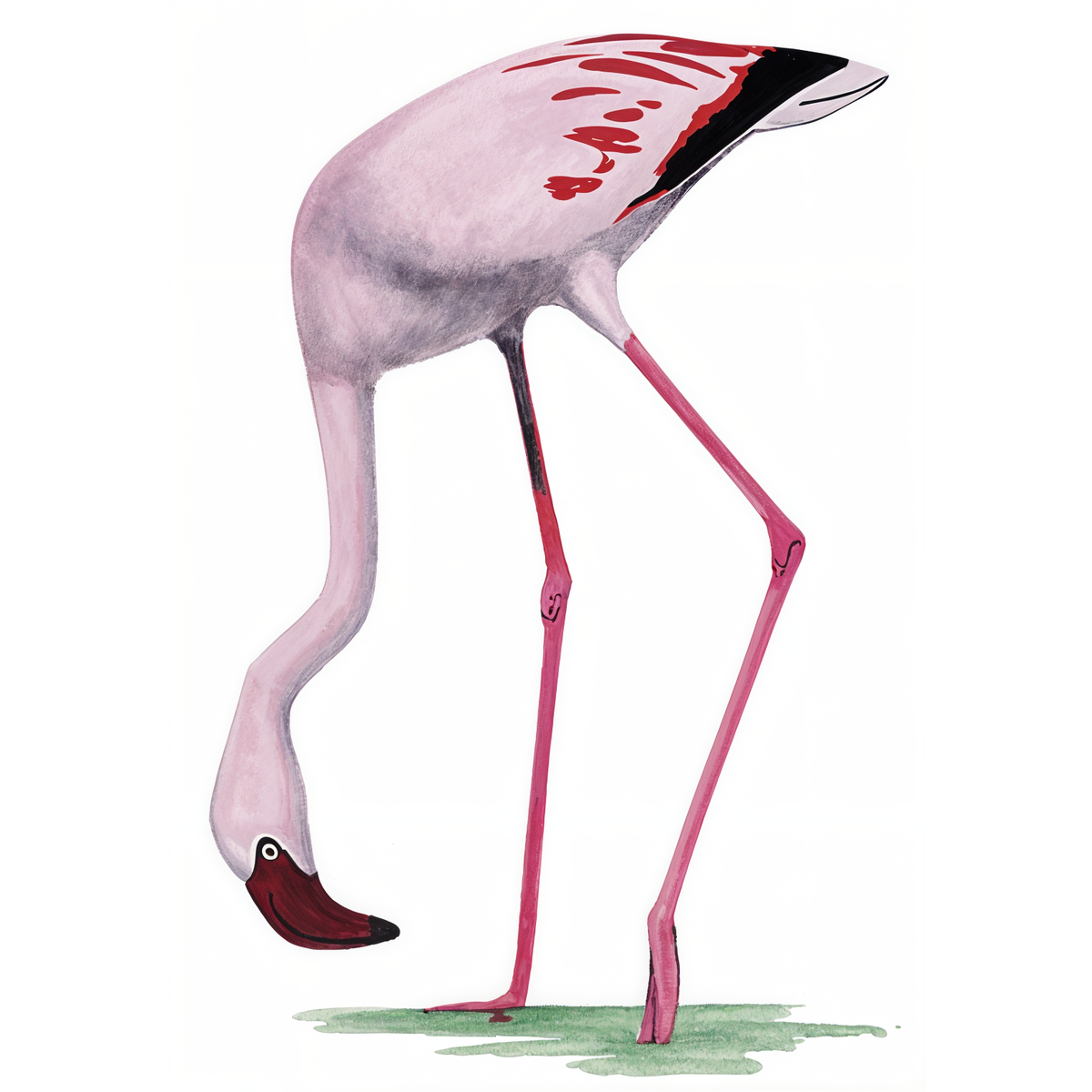
Occur in flocks of many thousands or singly. The two species described below may be found together. They prefer shallow saline pans, dams and estuaries, as well as sheltered coastal bays, but are nomadic and remain in one place only for as long as conditions are suitable. Over most of the region they are infrequently seen. Both species have a honking call which, in flocks, sounds like babbling. Immatures are grey-brown with a bill pattern similar to that of adults. They feed on algae or aquatic invertebrates which are filtered from the water with specialised bills, the feeding birds walking in a characteristic posture with the head held upside down.