
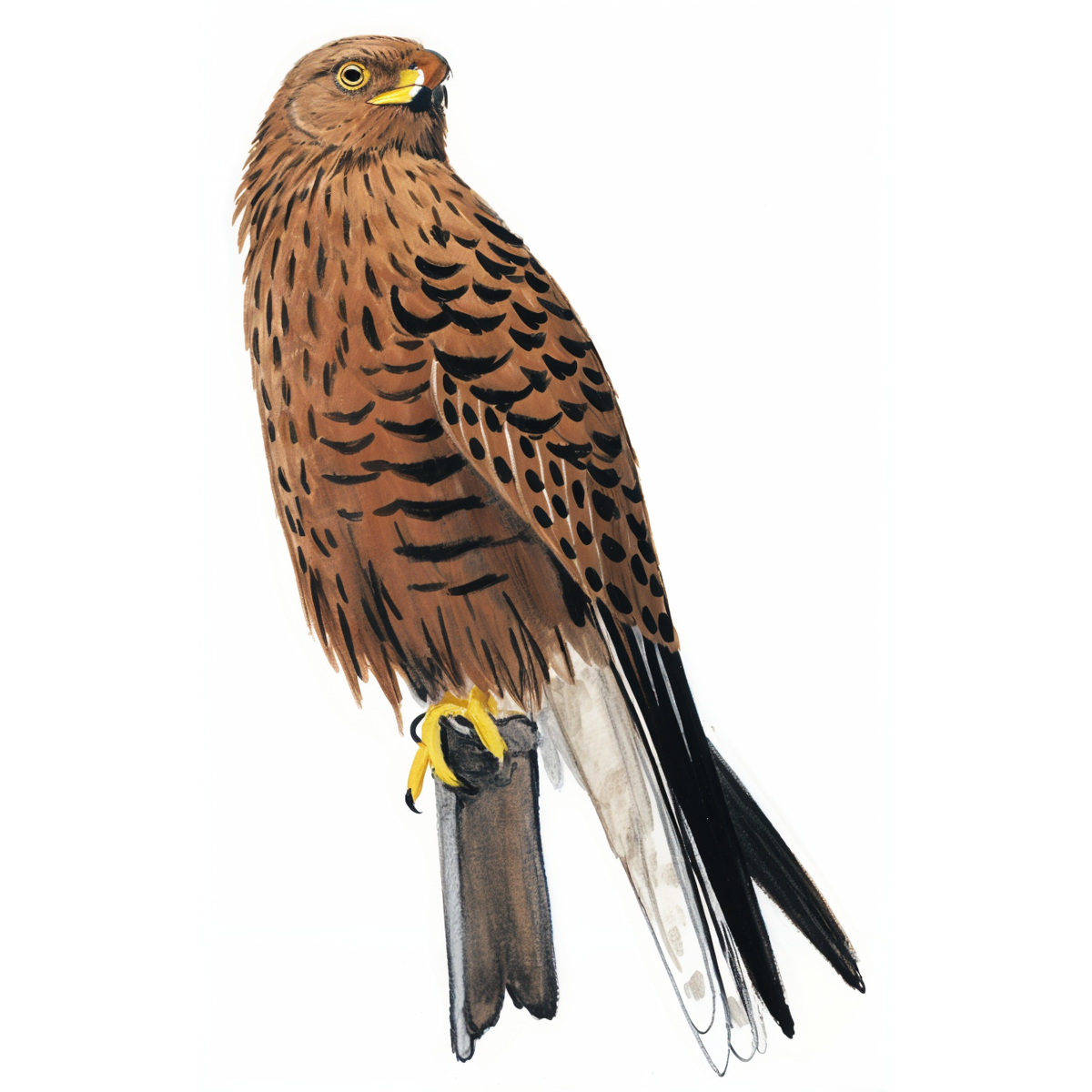


Greater Kestrel

Falco rupicoloides

Grasslands. Entirely rufous upperparts and body; white underwings and undertail.
Falcons, Kestrels
LC
Not Endemic
Greater Kestrel AI

Description

Common resident. At rest told from [Rock Kestrel] or [Lesser Kestrel] by entirely rufous plumage with blackish streaks, spots and bars all over, and whitish eyes. In flight told by white underwings. Immature closely similar but has dark eyes. Occurs singly or in pairs in grassland or lightly wooded thornveld, especially in arid regions. Usually perches on top of a thorn tree or roadside post; sometimes hovers. 200-350 g.

Quick Facts

size

Size

36 cm - M

behaviour

Names

A: Grootrooivalk
Z: umathebethebanomkhulu
Ss: Seotsanyana Se Seholo
G: Steppenfalke

Bird Family

Small raptors characterised by pointed wings and, usually, prominent ‘sideburns'. Females are larger than males. Falcons are aerial hunters, typically seizing smaller birds in a rapid dive from above. Characteristic calls are high-pitched ‘kek-kek-kek-kek' sounds, uttered when agitated. Kestrels are small falcons that eat insects caught in the air with their feet, or small mammals and reptiles caught on the ground. Their flight is more leisurely than that of true falcons.


Rufous
Coastal

Distribution

Gallery

Greater Kestrel AI
behaviour

Behaviour

Breeding

Breeding

Habitat

Habitat

Occurs singly or in pairs in 'grassland' or lightly wooded thornveld, especially in arid regions.


behaviour

Best Locations

0 Cart