

Greater Blue-eared Starling

Lamprotornis chalybaeus

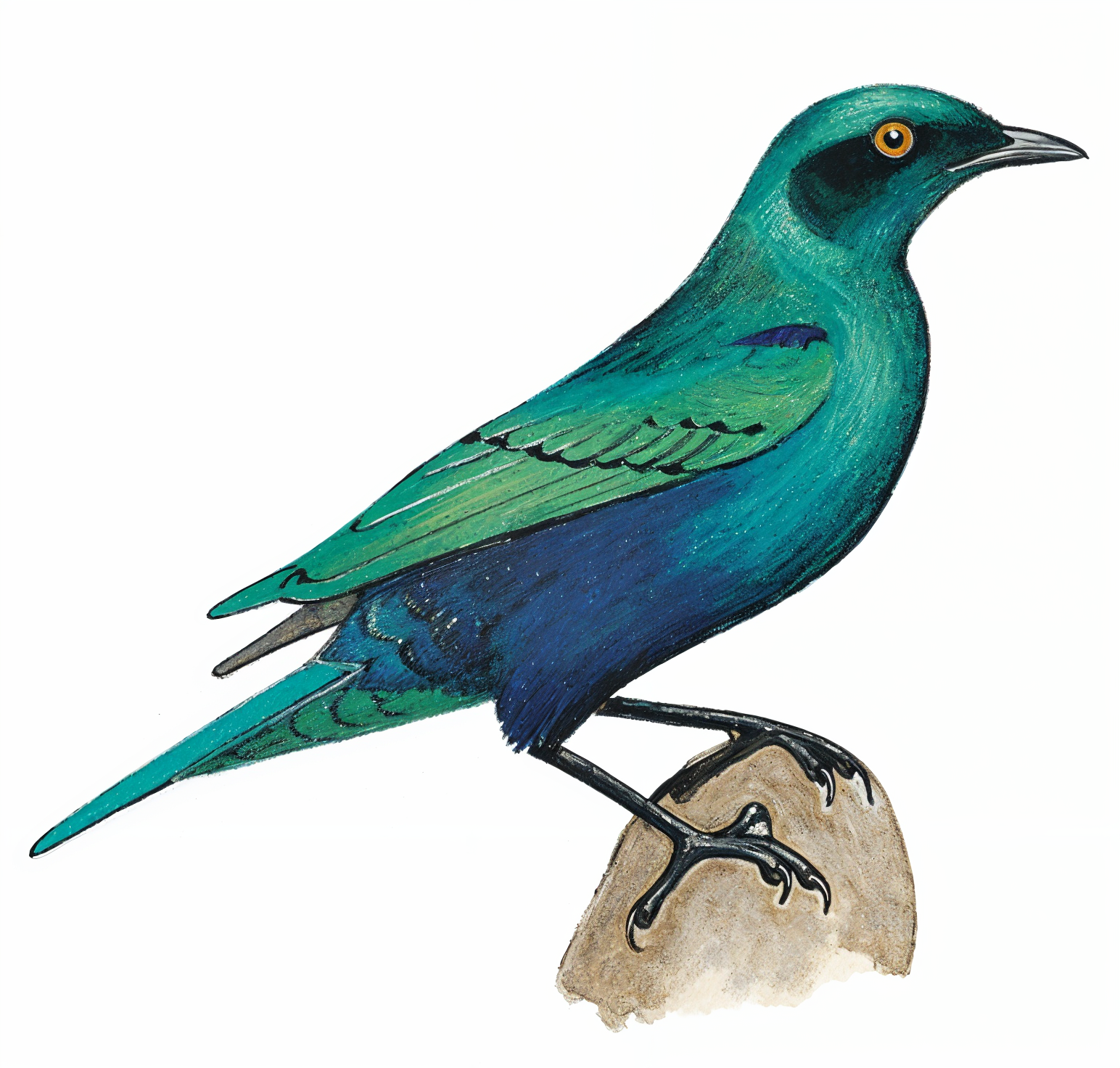
Woodland. Head and breast glossy blue; wings glossy green; flanks and belly purple; eyes yellow.
Starlings
LC
Not Endemic
Greater Blue eared Starling AI

Description

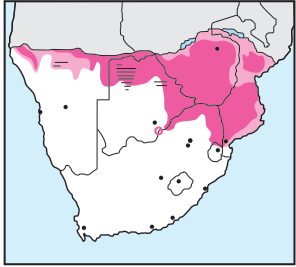
Common resident. One of three short-tailed and closely similar glossy starlings; cf. Miombo Blue-eared Starling and Cape Starling. Differs from [Cape Starling] in blackish ear-patch and royal-blue belly and flanks. Difficult to distinguish from [Miombo Blue-eared Starling], but differs in larger size, blue (not magenta) flanks and two variable rows of black spots on the wing coverts. Immature is duller, underparts sooty, eye grey. The call is ‘sque-eear, sque-eear-eeear’, recalling [White-fronted Bee-Eater]. Found in pairs when breeding, otherwise in large flocks in woodland and bushveld. In the Kruger National Park lives commensally with humans at rest camps during winter.

Quick Facts

size

Size

21-23 cm - M

behaviour

Names

A: Groot-blouoorglansspreeu
G: Grünschwanz-Glanzstar

Bird Family

A well-known family of frugivorous and insectivorous birds with strong, slightly decurved bills and strong legs. Many species form flocks, especially when roosting. Their calls are mainly various unmusical squeaks and squawks. Several species have adapted to town life and two have been introduced from other countries. Unless otherwise stated, the immatures resemble adults.


Blue
Savanna Bushveld

Distribution

Gallery

behaviour

Behaviour

Breeding

Breeding

Habitat

Habitat

Found in pairs when breeding, otherwise in large 'flocks' in woodland and bushveld.

behaviour

Best Locations

0 Cart