

Eurasian Curlew

Numenius arquata

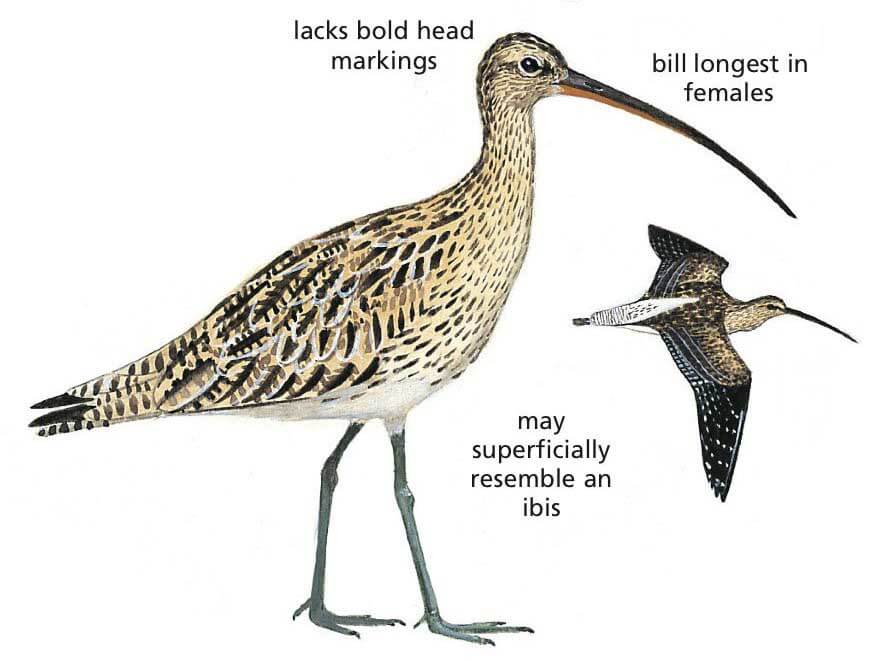
Tidal waters. Very large shorebird with very long, down-curved bill; head, mantle and breast buff, well streaked dark brown with buffy-white feather edges; wing feathers edged white; underbelly white.
Allied Waders, Sandpipers
LC
Not Endemic
Eurasian Curlew Newman's birds

Description

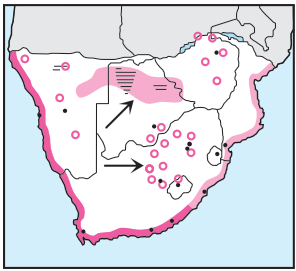
Uncommon summer visitor. Much larger than [Eurasian Whimbrel] with extremely long, decurved bill. Shows no distinctive pattern on crown. In flight shows similar large white area on back and rump to [Eurasian Whimbrel], but generally paler overall appearance. From a distance could also be confused with an ibis. Utters various calls, including ‘cur-lew’ or ‘coorwe-coorwe’ and ‘quee-quee-quee’. Groups, up to about 50 or 60, occur on coastal shorelines (especially southern and western coasts), estuaries, coastal lagoons, tidal rivers and harbours. A vagrant to inland waters.

Quick Facts

size

Size

59 cm - L

behaviour

Names

A: Grootwulp
Ss: Seyalelebopo Sa Molomokgopo
G: Sichelstrandläufer

Bird Family

A group of small birds usually found along shorelines and wading in shallow water. They usually have longish legs and bills for probing mud, feeding on small insects and invertebrates. Species breed in northern regions and during this time the males assume richly coloured plumage. They migrate south in drab non-breeding plumage at the start of the southern hemisphere summer. Illustrations depict the species in non-breeding plumage, unless otherwise indicated.


Speckled
Coastal

Distribution

Gallery

Eurasian Curlew Newman's birds
behaviour

Behaviour

Breeding

Breeding

Habitat

Habitat

Groups, up to about 50 or 60, occur on coastal shorelines (especially southern and western coasts), estuaries, coastal lagoons, tidal rivers and harbours.


behaviour

Best Locations

0 Cart