

Eastern Nicator

Nicator gularis

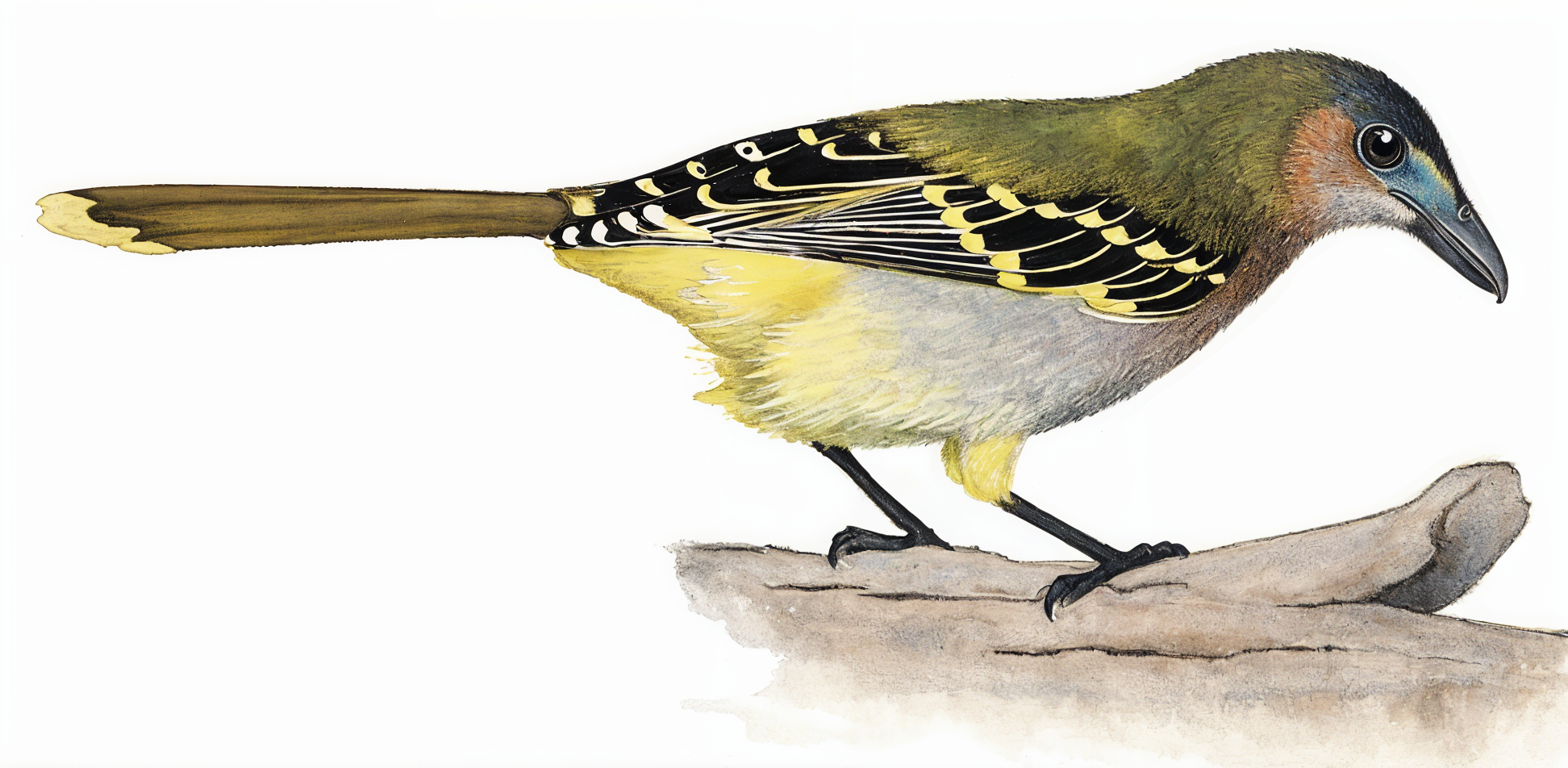
Dense bush. Greenish above; wing feathers and tail tipped yellow; ­underbelly, thighs and vent yellow.
Allies, Bulbuls
LC
Not Endemic
Eastern nicator AI

Description

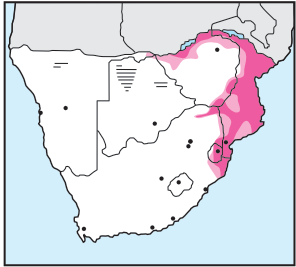
Uncommon resident. Very similar in appearance to Western Nicator (N. chloris) found further north and west, which is slightly larger in size. Identified by heavy, shrike-like bill and yellow-spotted wing-feathers, the spots smaller in immature. The call is a series of mellow trills and warbles rising to a climax and then restarting at low volume; call a loud ‘chuck’ when alarmed. Occurs singly in dense coastal, riverine and forest-fringe thickets or in the mid stratum of riverine forests and mixed bushveld. Secretive and easily overlooked if not calling. Sparsely distributed.

Quick Facts

size

Size

23 cm - M

behaviour

Names

A: Geelvleknikator
Z: umalusinkomo
G: Bülbülwürger

Bird Family

Frugivorous and insectivorous birds with clear, whistling calls. They frequent evergreen bush and forests. Sexes are alike, and immatures are duller.


Yellow
Forest

Distribution

Gallery

behaviour

Behaviour

Breeding

Breeding

Habitat

Habitat

Occurs singly in dense coastal, riverine and 'forest'-fringe thickets or in the mid stratum of riverine forests and mixed bushveld.


behaviour

Best Locations

0 Cart