
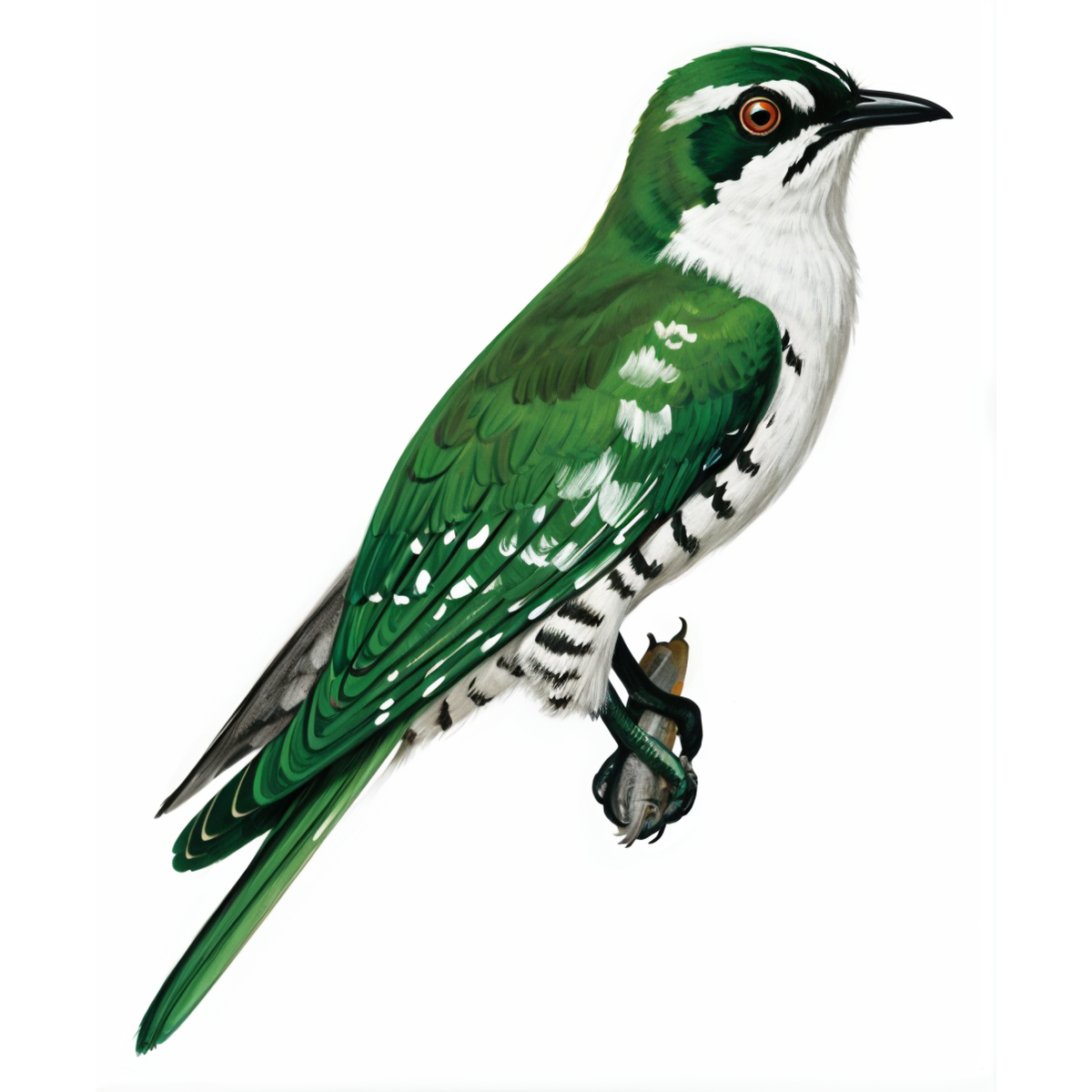


Diederik Cuckoo

Chrysococcyx caprius

Woodland. Male bright green above; white below; bill black; eyes red. Female similar, but with coppery ­mantle.
Cuckoos
LC
Not Endemic
Diederik Cuckoo AI

Description

Common summer resident. Both sexes differ from male of [Klaas’s Cuckoo] in having white marks before and behind the eyes, a white central stripe over the crown and multiple white marks on the wings; also red eyes and a black bill. Female is more coppery on the upper parts. Immature has coral-red bill, blue eyes and spotted underparts; immature female mostly coppery above. Male calls a plaintive ‘dee-dee-dee-deederik’ from a tree top or in flight; female calls ‘deea-deea-DEEA’. Usually occurs singly in a variety of wooded habitats, including reed beds and suburbia. Parasitises weavers, bishops and sparrows, and often seen while being chased off noisily by weavers.

Quick Facts

size

Size

18.5 cm - S

behaviour

Names

A: Diederikkie
Z: uNononekhanda
Ss: Ntetekeng Ya Leihlofubedu
G: Diderikkuckuck, Goldkuckuck

Bird Family

Cuckoos are brood parasites, laying their eggs in the nests of other birds, and the majority are absent from southern Africa during the period March-September. The related coucals are larger, more robust and mainly sedentary birds that build their own nests and rear young in the conventional manner.


Green
Savanna Bushveld

Distribution

Gallery

Diederik Cuckoo AI
behaviour

Behaviour

Breeding

Breeding

Habitat

Habitat

Usually occurs singly in a variety of wooded habitats, including reed beds and suburbia.

behaviour

Best Locations

0 Cart