

Common Starling

Sturnus vulgaris

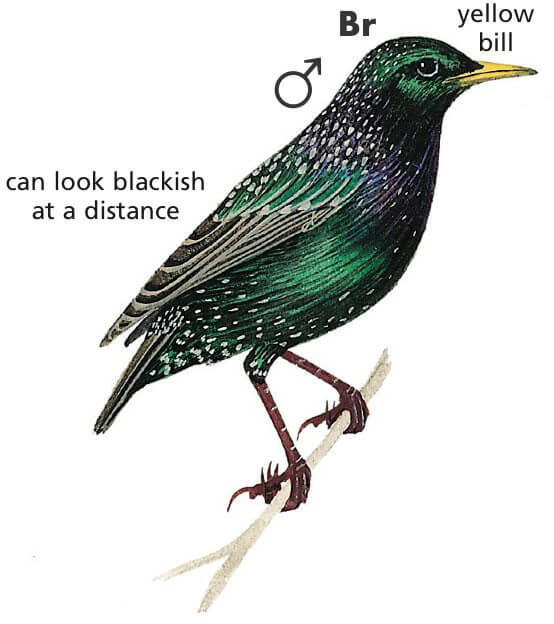
Suburbia. Its green-black plumage shows a purple sheen about the upper breast and mantle.
Starlings
LC
Indroduced Species
Common Starling

Description

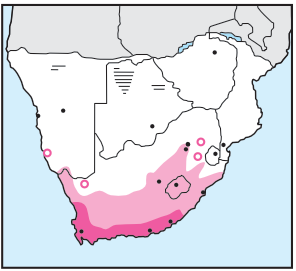
Common introduced resident. At a distance looks blackish; longer-billed, shorter-tailed and stockier than [Black-bellied Starling]. Sexes similar when not breeding (winter). Immature mouse-brown with whitish throat. In flight appears sharp-winged cf. [Wattled Starling]. Call is a grating ‘tcheerr’; also a rambling song of throaty warbles, ‘chirrup’ notes and creaking whistles. Walks with a quick, jerky action, occasionally runs or hops, and feeds mostly on the ground. Often in flocks, especially when roosting. Occurs in various man-made habitats, including suburbia, playing fields and farms.

Quick Facts

size

Size

20-22 cm - M

behaviour

Names

A: Europese Spreeu
Z: ikhwinsi laseYurobhu
Ss: Lehodi-Papapa
G: Star

Bird Family

A well-known family of frugivorous and insectivorous birds with strong, slightly decurved bills and strong legs. Many species form flocks, especially when roosting. Their calls are mainly various unmusical squeaks and squawks. Several species have adapted to town life and two have been introduced from other countries. Unless otherwise stated, the immatures resemble adults.


Green
Human Settlements

Distribution

Gallery

Common Starling
behaviour

Behaviour

Breeding

Breeding

Habitat

Habitat

Occurs in various man-made habitats, including suburbia, playing fields and farms.

behaviour

Best Locations

0 Cart