

Common Moorhen

Gallinula chloropus

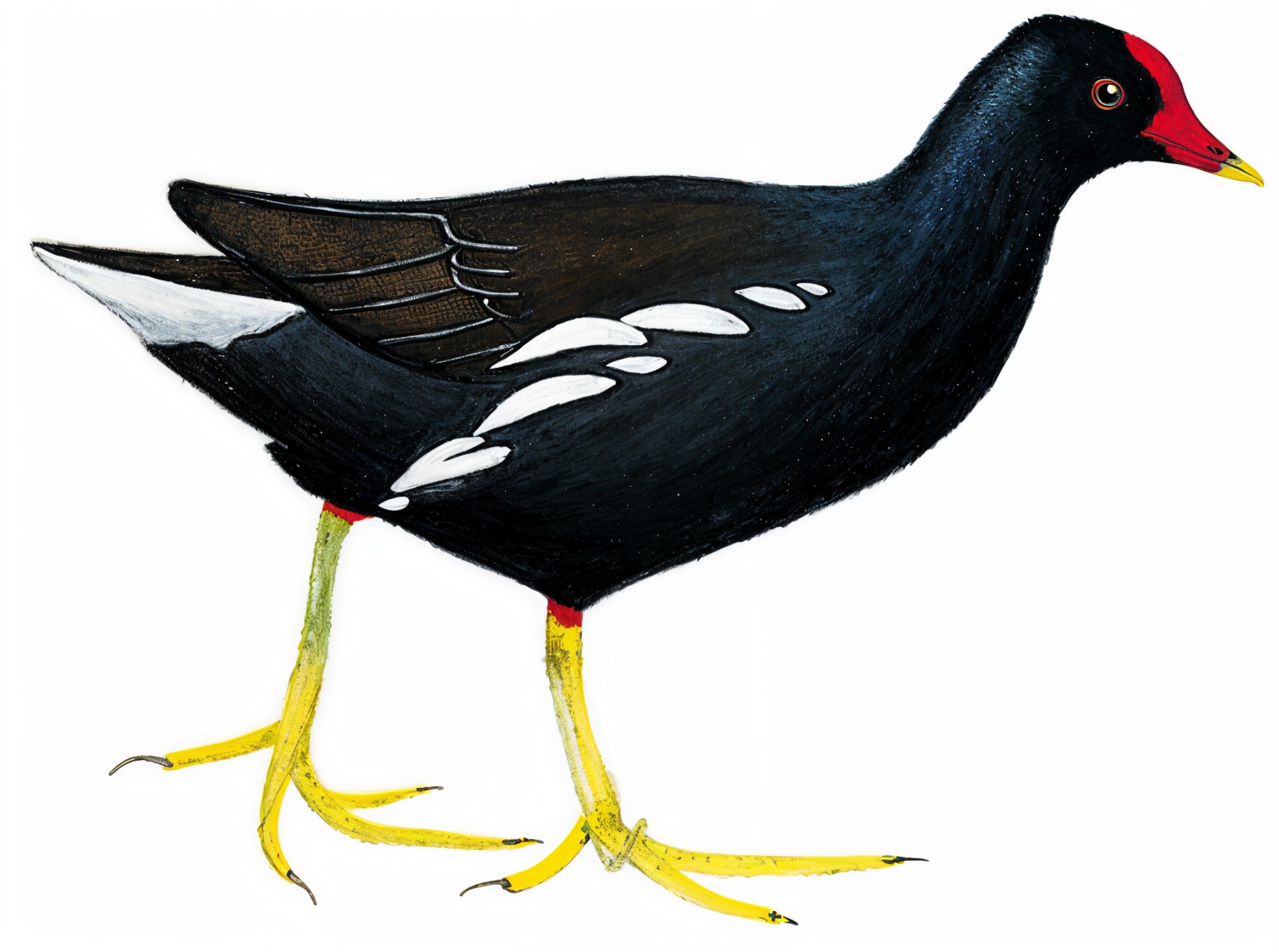
Inland waters. White flank marks; red frontal shield and bill; bill-tip and legs yellow.
Coots, Gallinules, Moorhens
LC
Not Endemic
Common Moorhen AI

Description

Common resident. Larger than [Lesser Moorhen], with bright red bill and rounded frontal shield. Tip of bill and legs yellow; flank feathers white. Legs yellow or greenish yellow with red band around tibia. Immature is browner. The call is a high-pitched, descending ‘kr-rrrrk’. Frequents dams, pans and quiet rivers with fringing reed beds, singly or in pairs. Swims more in open water than [Lesser Moorhen] but also feeds out of water in vleis and marshlands.

Quick Facts

size

Size

30-36 cm - M

behaviour

Names

A: Grootwaterhoender
Z: inkukhayamanzi
Ss: Kgohometsi
G: Teichhuhn

Bird Family

Small to fairly large, long-legged, large-footed, mainly freshwater-associated birds. A few species inhabit grassland, vleis or lush forest undergrowth. Most water-associated species habitually flick their tails to reveal white undertail coverts. Coots and moorhens are blackish with brightly coloured frontal shields (foreheads) and bills. Gallinules have blue-green plumage. Many species are extremely secretive and almost impossible to see, except when they fly clumsily with feet hanging low over vegetation.


Black
Wetlands

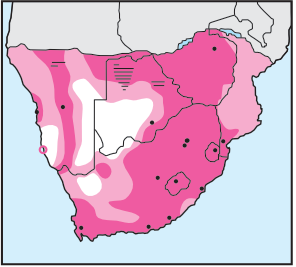
Distribution

Gallery

Common Moorhen AI
behaviour

Behaviour

Breeding

Breeding

Habitat

Habitat

Frequents dams, pans and quiet rivers with fringing reed beds, singly or in pairs. Swims more in open water than [Lesser Moorhen] but also feeds out of water in vleis and marshlands.


behaviour

Best Locations

0 Cart