
Black Harrier

Circus maurus

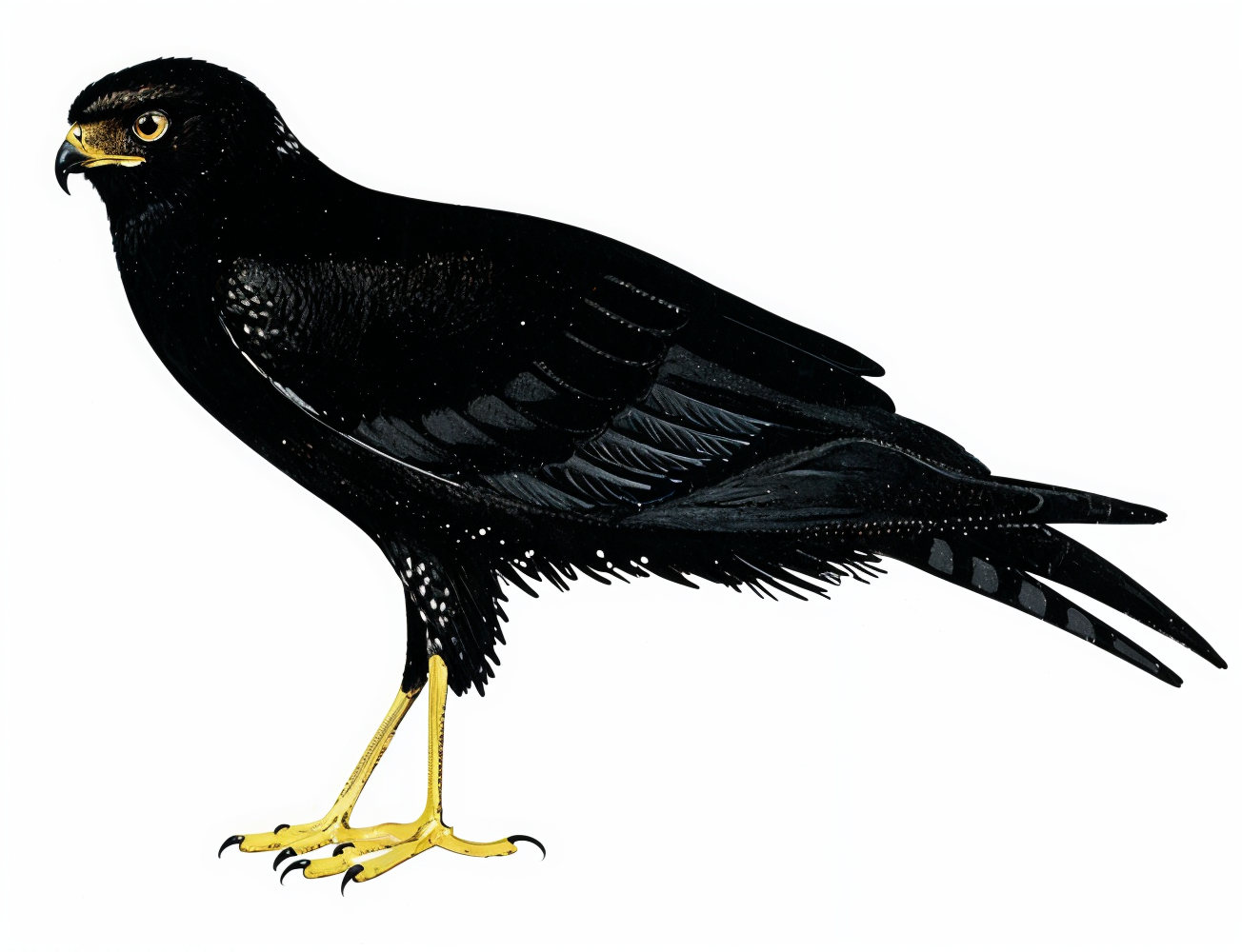
Farmlands & grasslands. Cere, eyes and legs ­yellow. Underwing shows white when hovering.
Harriers, Marsh Harriers
EN
Endemic
Black Harrier AI

Description

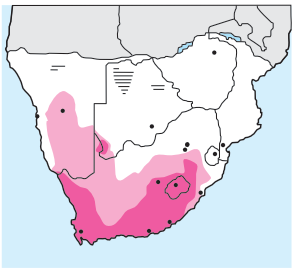
Fairly common endemic resident. Adult appears entirely black when settled, but in flight shows striking white flight feathers, white rump and banded tail. Sexes are alike. immature has pale buff underparts and heavily spotted upper breast; in flight shows white wing-flashes and white rump like female and immature [Pallid Harrier] and [Montagu’s Harrier]. Unlikely to be confused with other harrier morphs due to distinctive tail barring. Usually silent, but in courtship F ‘peew-peew’ and M ‘cheerw’. Occurs singly or in pairs over fynbos, Karoo, grassland and croplands. N-Br. birds venture north east to fluctuations in primary food source, Vlei Rat, also small mammals, birds and reptiles. Hunt in low flight while scanning the ground. Population in range around 1000 breeding pairs. 350 – 600 g.

Quick Facts

size

Size

48-53 cm - L

behaviour

Names

A: Witkruisvleivalk
Z: umamhlangenomnyama
Ss: Mmankgodimohlaka E Montsho
G: Mohrenweihe

Bird Family

Long-winged, long-tailed, long-legged hawks that inhabit grassland or marshes. They usually fly low with leisurely, buoyant flight, head bent downwards and legs dangling slightly, bouts of flapping alternating with glides and wings held in a shallow ‘V'-shape above their bodies. They settle on the ground or perch on posts, less often in trees. Silent birds.


Black
Grasslands

Distribution

Gallery

Black Harrier AI
behaviour

Behaviour

Breeding

Breeding

Habitat

Habitat

Occurs singly or in pairs over 'fynbos', 'Karoo', 'grassland' and croplands.

behaviour

Best Locations

0 Cart