

Bearded Vulture (Lammergeier)

Gypaetus barbatus

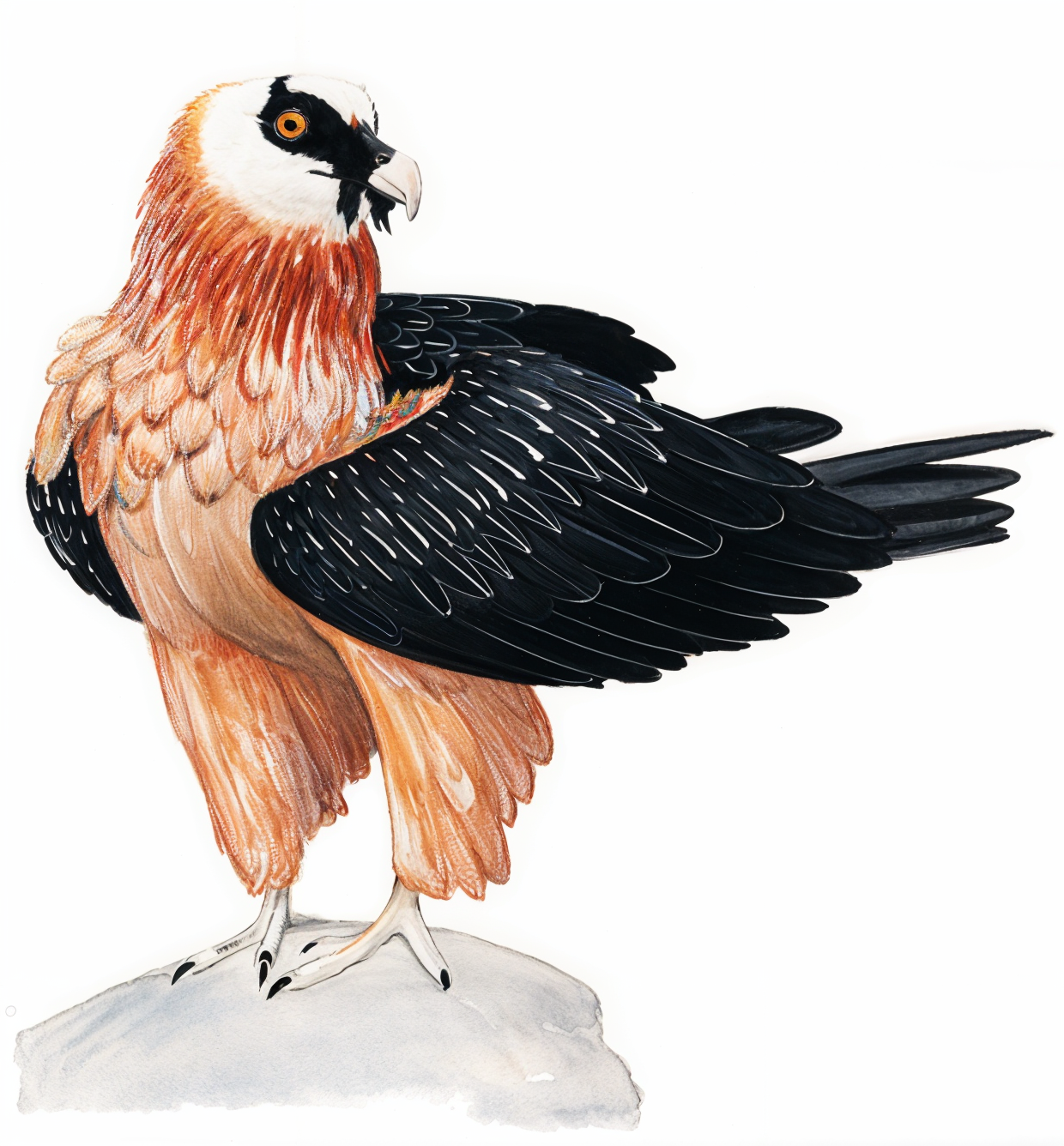
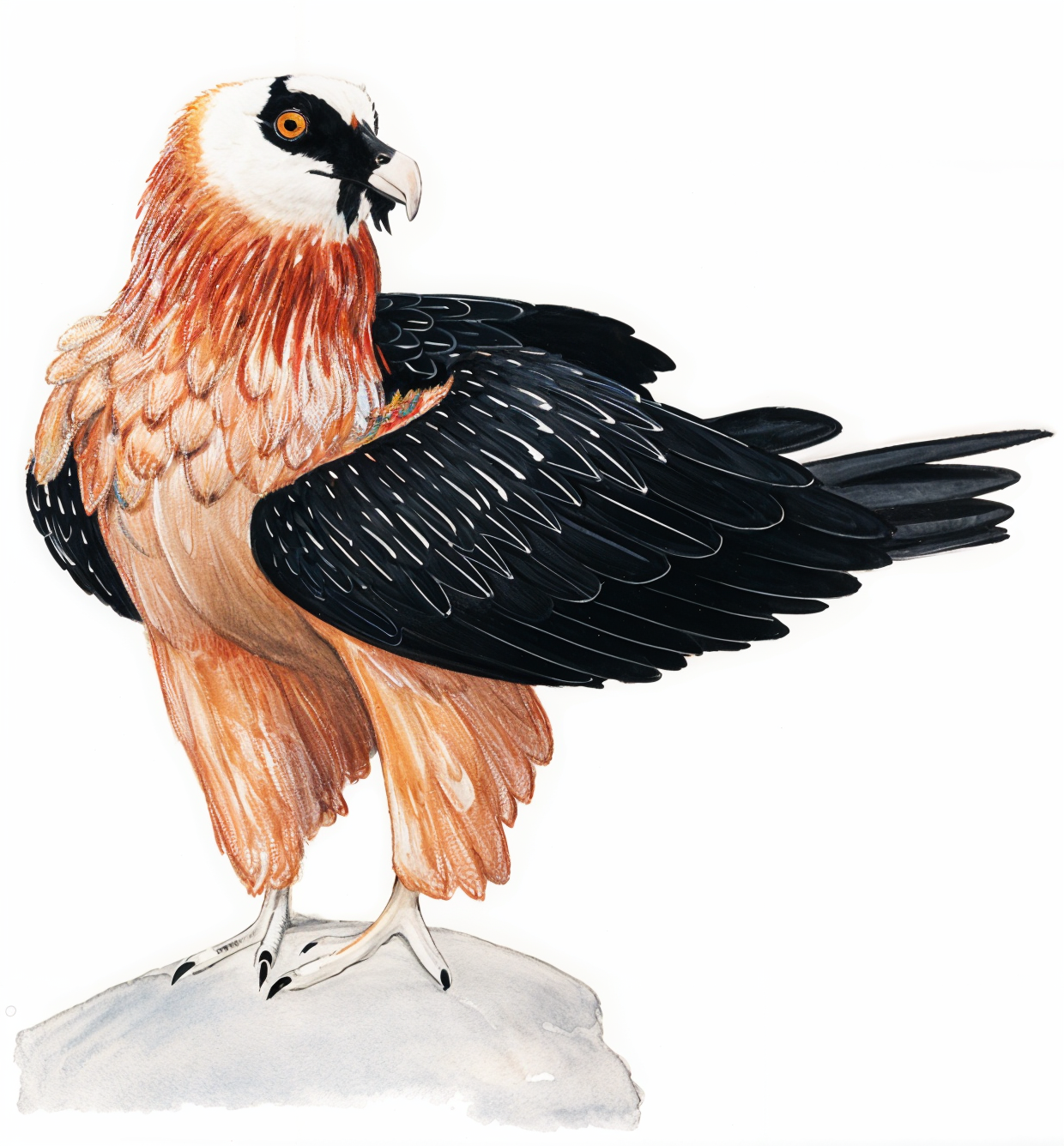
Montane cliffs. Black mask and beard on white face; rest of body ginger-brown; wings and tail dark brown; eyes pale yellow and red; feet whitish.
Vultures
CR
Locally Rare
Bearded Vulture AI

Description

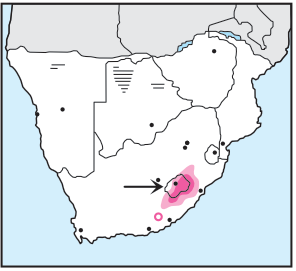
Uncommon localised resident. Differs from all other vultures in loosely feathered head and legs, the ‘beard’ visible in both adult and Juv. Unlikely to be confused with any other bird of prey within its restricted range. Females larger with broder longer wings. In flight, long, wedge-shaped tail diagnostic. Juvenile plumage darker motled with a dark face mask. Occurs singly or in small numbers in the Drakensberg and Maluti mountains of the southeast, rarely further afield. Soars by day usually feeding early morning and roosts on inaccessible cliffs. The variable orange colour is a result of iron oxide particles permanently dying the feathers, obtained via dust or water bathing. Adults feeds mainly on bone and marrow, that if too large are dropped from the air on rocky outcrops (known as ossuaries) to shatter. Chicks fed on meat. Nest made of sticks on cliff edges. Call during display is a shrill wheezing whistle. Southern African population critically endangered and in decline, estimated at over 200 pairs. 4,5-7 kg.

Quick Facts

size

Size

110 cm - VL

behaviour

Names

A: Baardaasvoël
Z: ugaganontshebe
Ss: Seodi
G: Bartgeier

Bird Family

Vultures are diurnal birds and, like other birds of prey are characterised by hooked bills suited to a mainly carnivorous diet. Vultures are typified by their large size, heavy, hooked bills, necks wholly or partially devoid of feathers (the exception being the aberrant Bearded Vulture) and, for birds of prey, relatively weak feet not suited to grasping prey. Vultures feed on carrion, soar with ease during much of the day and bathe in ponds and rivers. They are normally silent, but hiss and squeal when squabbling over food.


Rufous
Rocky Areas

Distribution

Gallery

Bearded Vulture AI
behaviour

Behaviour

Breeding

Breeding

Habitat

Habitat

Occurs singly or in small numbers in the Drakensberg and Maluti mountains of the southeast, rarely further afield. Soars by day usually feeding early morning and roosts on inaccessible cliffs. Adults feeds mainly on bone and marrow, that if too large are dropped from the air on rocky outcrops (known as ossuaries) to shatter.


behaviour

Best Locations

0 Cart