
86 cm - VL

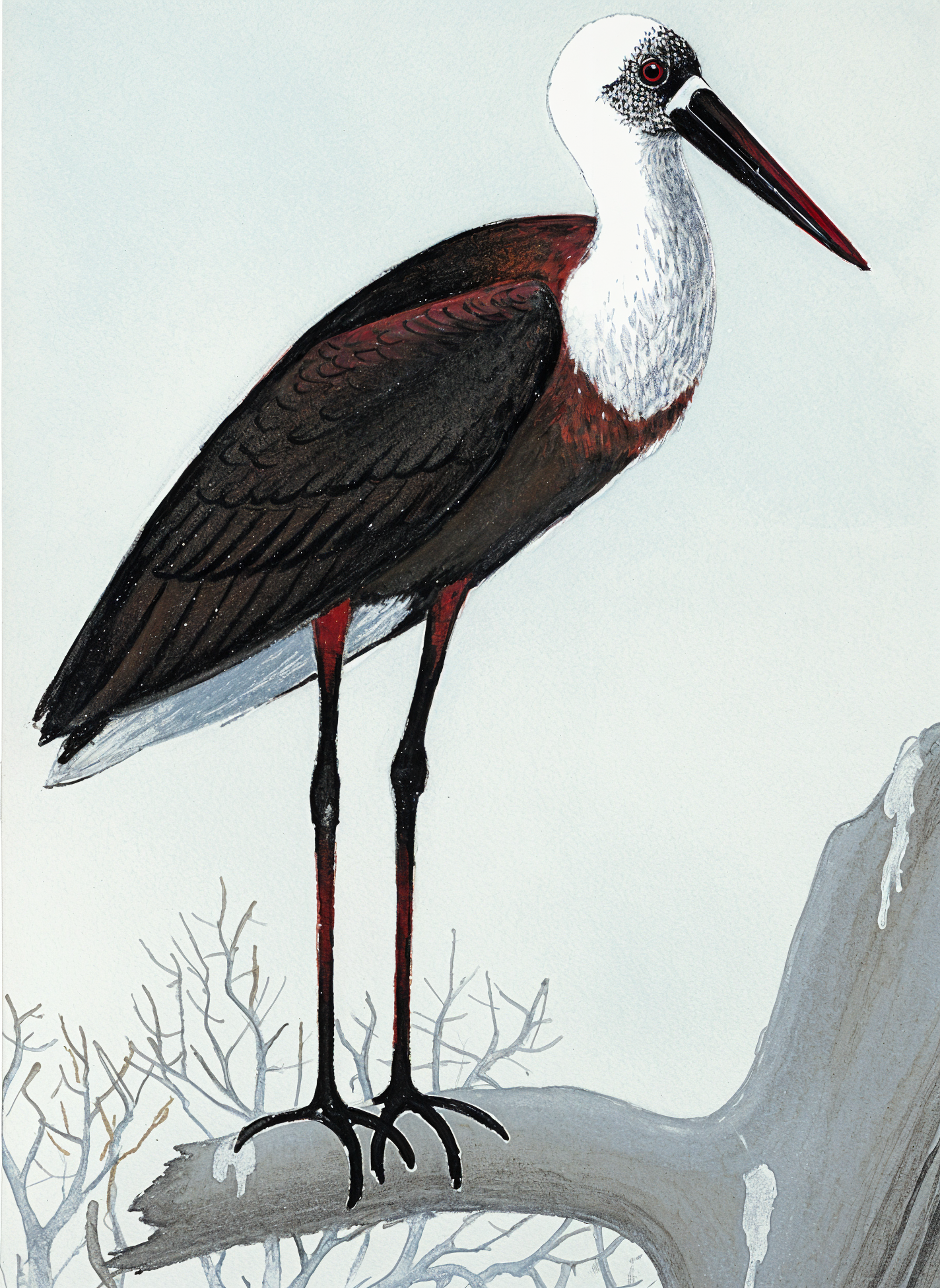
A: Wolnekooievaar
Z: isithandamanzi
Ss: Mokotatsie Wa Molomosweu
G: Wollhalsstorch

Large to very large long-legged and long-necked birds with straight, stout bills. Plumage mostly black and white; bills and legs whitish, reddish or dark. Storks walk with a stately gait and frequently rest on the ground with the lower parts of their legs stretched forward. In flight, the neck is stretched out (unlike herons, which fly with retracted necks) and the legs may trail down at a slight angle to the body. Most storks sometimes soar to great heights during the heat of the day; many are communal in habit and most frequent water or damp places to some extent. Diet ranges from large insects, reptiles, frogs and other waterlife to carrion in one species. They make guttural sounds and hisses at nests, and bill-clapping is used as a greeting between pairs. The nests are large stick structures placed in trees or on rocks, cliffs or the ground.

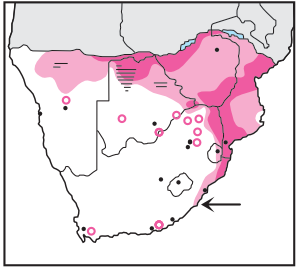
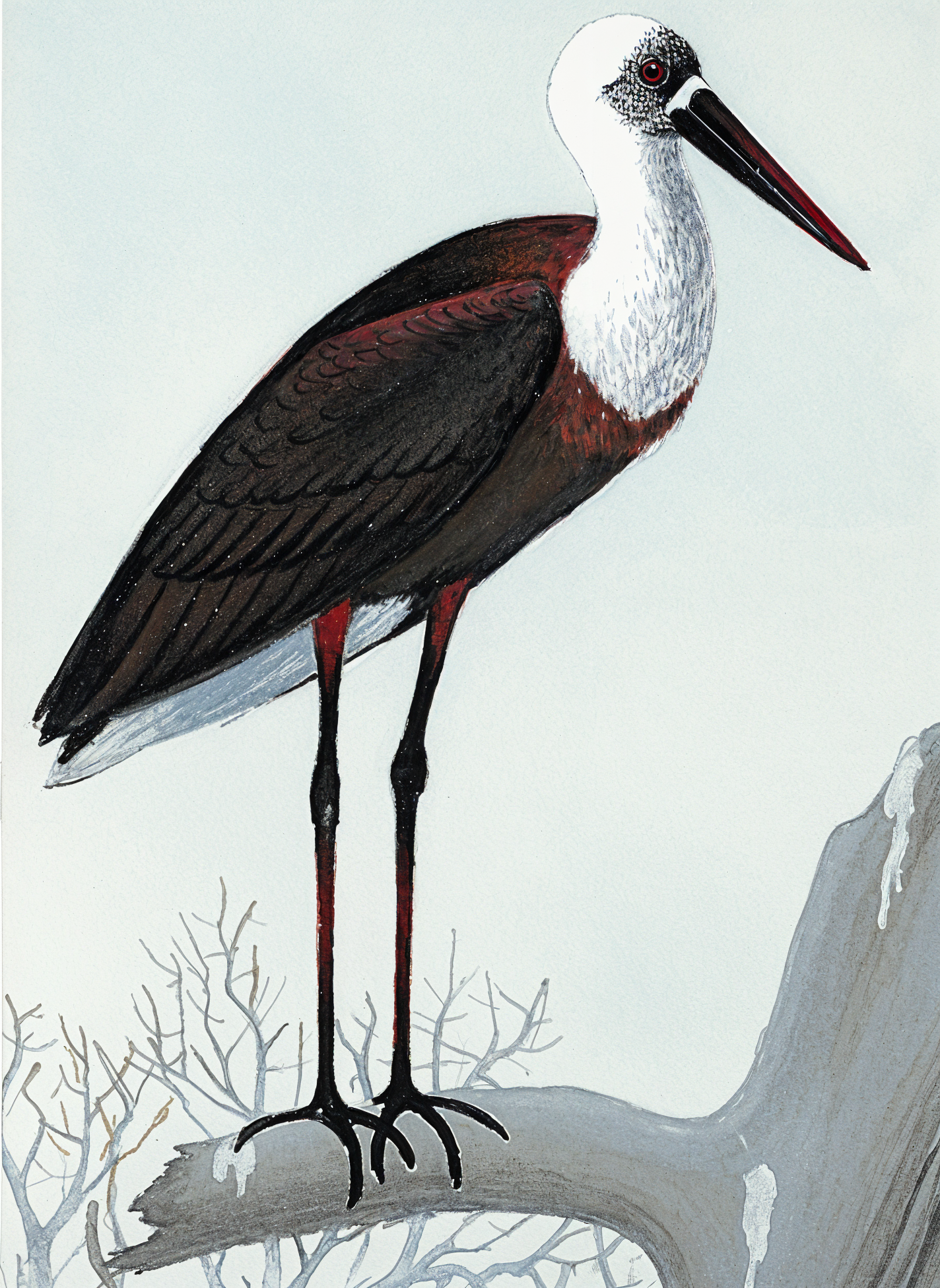


Usually solitary but large influxes occur during summer at floodplains, pans and rivers in well-wooded regions of northern Botswana and the Zambezi Valley in Zimbabwe.