

African Wattled Lapwing

Vanellus senegallus

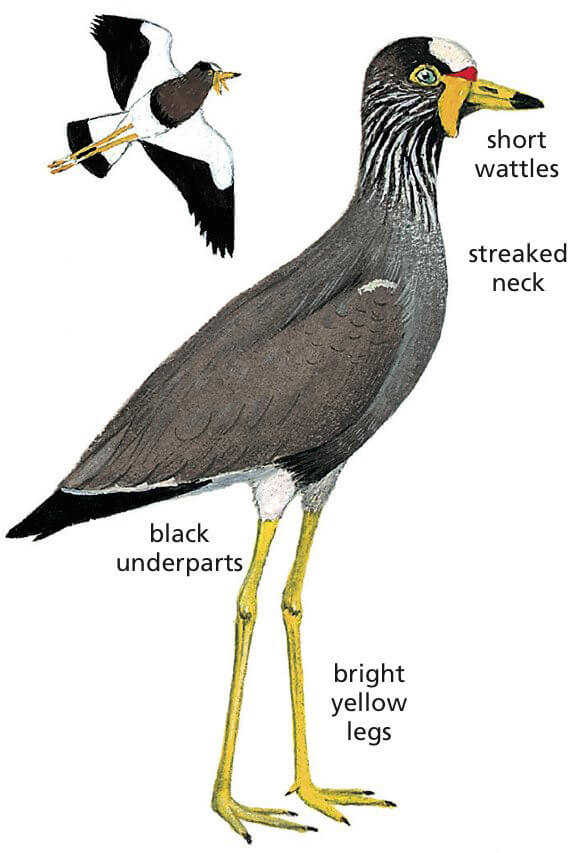
Moist grassland. Forecrown white; rear of crown dark brown; neck streaked black; rest of upperparts and breast pale grey-brown; belly white; wattles, bill and legs yellow.
Lapwings
LC
Not Endemic
African Wattled Lapwing

Description

Common resident. Bright yellow bill, wattles and legs distinguish it from all but [White-crowned Lapwing], from which it differs in shorter wattles, white patch only on forecrown, a streaked neck, lack of white bars on folded wings and brown breast and underparts (except for the belly). The call is a shrill ‘kwep-kwep-kwep-kwep’, speeding up with increased agitation. Pairs and small groups frequent grassy waterside localities, riverbanks, dam walls, fringes of sewage ponds and vleis.

Quick Facts

size

Size

35 cm - M

behaviour

Names

A: Lelkiewiet
Z: umadevaphuzi
Ss: Lekekeruane La Hlahellakgutshwane
G: Senegalkiebitz

Bird Family

Long-legged terrestrial birds with characteristically black, white and brown colouring. Usually found in pairs or small groups, favouring short grassland areas never far from fresh water. Lapwings breed during the winter season, laying their well camouflaged eggs into a shallow scrape on the ground, which they aggressively and noisily defend from humans and other predators.


Light Brown
Grasslands

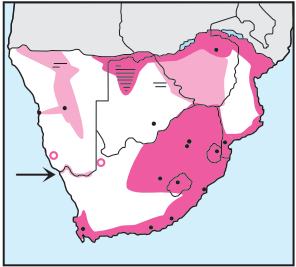
Distribution

Gallery

African Wattled Lapwing
behaviour

Behaviour

Breeding

Breeding

Habitat

Habitat

Pairs and small groups frequent grassy waterside localities, riverbanks, dam walls, fringes of sewage ponds and vleis.


behaviour

Best Locations

0 Cart