

African Stonechat

Saxicola torquatus

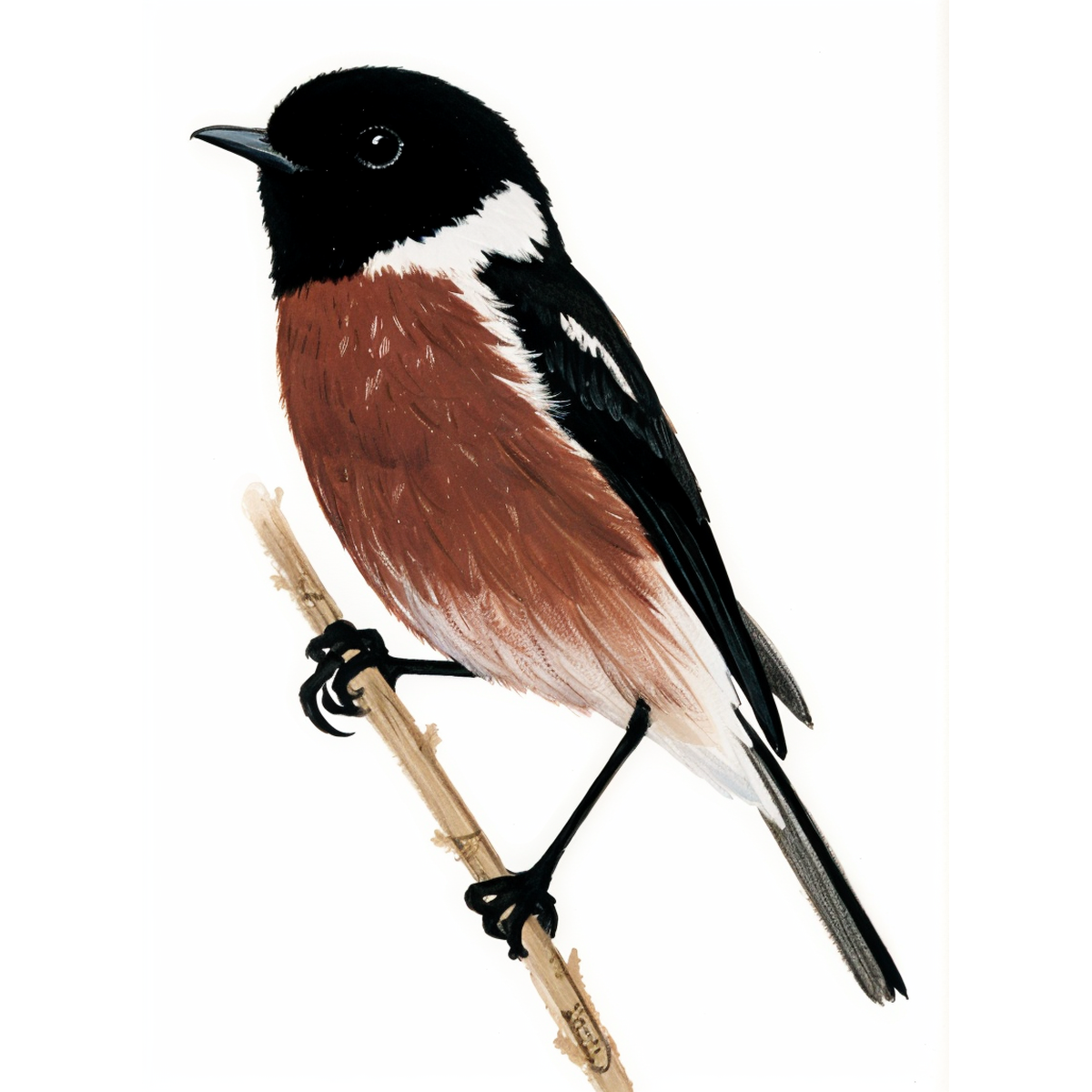
Vleis. Mainly black upperparts; white rump and half-collar; underparts rufous.
Chats, Robins, Thrushes
LC
Not Endemic
African Stone Chat male

Description

Common resident. At rest, male is striking and unmistakable. In flight, female is identified by white wing-patches. Both sexes identified by white rump; cf. [Whinchat]. Immature like adult but more speckled and may show indistinct buff eyebrow. Utters a grating ‘tsak, tsak’ like two marbles being struck together; usually preceded by a short, sharp whistle. Also has a short, shrill, warbling song. Usually found in pairs in a wide variety of open grassland habitats: near marshes, vleis, dams, streams and roadsides, perching on low shrubs or fences, from where it watches the ground for insects. Seasonal in some regions, moving to lower or higher altitudes.

Quick Facts

size

Size

14 cm - S

behaviour

Names

A: Gewone Bontrokkie
Z: isiChegu
Ss: Tlhatsinyane
G: Schwarzkehlchen

Bird Family

Largely terrestrial, insectivorous or frugivorous birds that sing from trees, some robins rating as among our finest songsters. The sexes are alike unless otherwise stated, while immatures usually have the feathers of the upperparts pale-edged, the underparts spotted.


Black & White
Grasslands

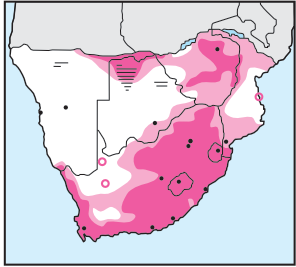
Distribution

Gallery

behaviour

Behaviour

Breeding

Breeding

Habitat

Habitat

Usually found in pairs in a wide variety of open 'grassland' habitats: near marshes, vleis, dams, streams and roadsides, perching on low shrubs or fences, from where it watches the ground for insects.


behaviour

Best Locations

0 Cart