

African Olive-Pigeon

Columba arquatrix

Forests and plantations. Dark, purple-brown with grey head and purple-grey neck; ­eye-rings, bill and legs bright yellow.
Doves, Pigeons
LC
Not Endemic
African olive Pigeon

Description

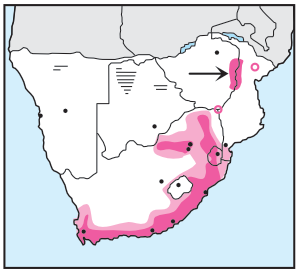
Fairly common resident. Yellow bill, eye-ring and feet conspicuous, even in flight. Otherwise appears as a large, dark pigeon with pale head. Call is a deep bubbling ‘crrooo, crooca, crooca, coooo’. Usually occurs in small flocks where trees are fruiting, even entering suburban gardens. In montane regions roosts in evergreen forests or exotic plantations, flying considerable distances daily to food sources. Often goes to roost early, sunning itself conspicuously on tree tops in late afternoon.

Quick Facts

size

Size

36-40 cm - M

behaviour

Names

A: Geelbekbosduif
Z: iVukuthu-lehlathi
Ss: Leebamphapane
G: Oliventaube

Bird Family

A well-known group of mostly seed-eating, terrestrial (except for the arboreal fruit-feeding pigeons) birds that build flimsy stick platform nests in trees. The distinction between pigeons and doves is ill-defined: larger species tend to be called pigeons, smaller ones doves. Immatures are dull versions of the adults. Many species become very common and tame near human habitation.


Purple
Forest

Distribution

Gallery

African olive Pigeon
behaviour

Behaviour

Breeding

Breeding

Habitat

Habitat

Usually occurs in small 'flocks' where trees are fruiting, even entering 'suburban' gardens. In montane regions roosts in evergreen forests or exotic plantations, flying considerable distances daily to food sources.


behaviour

Best Locations

0 Cart