

African Fish-Eagle

Haliaeetus vocifer

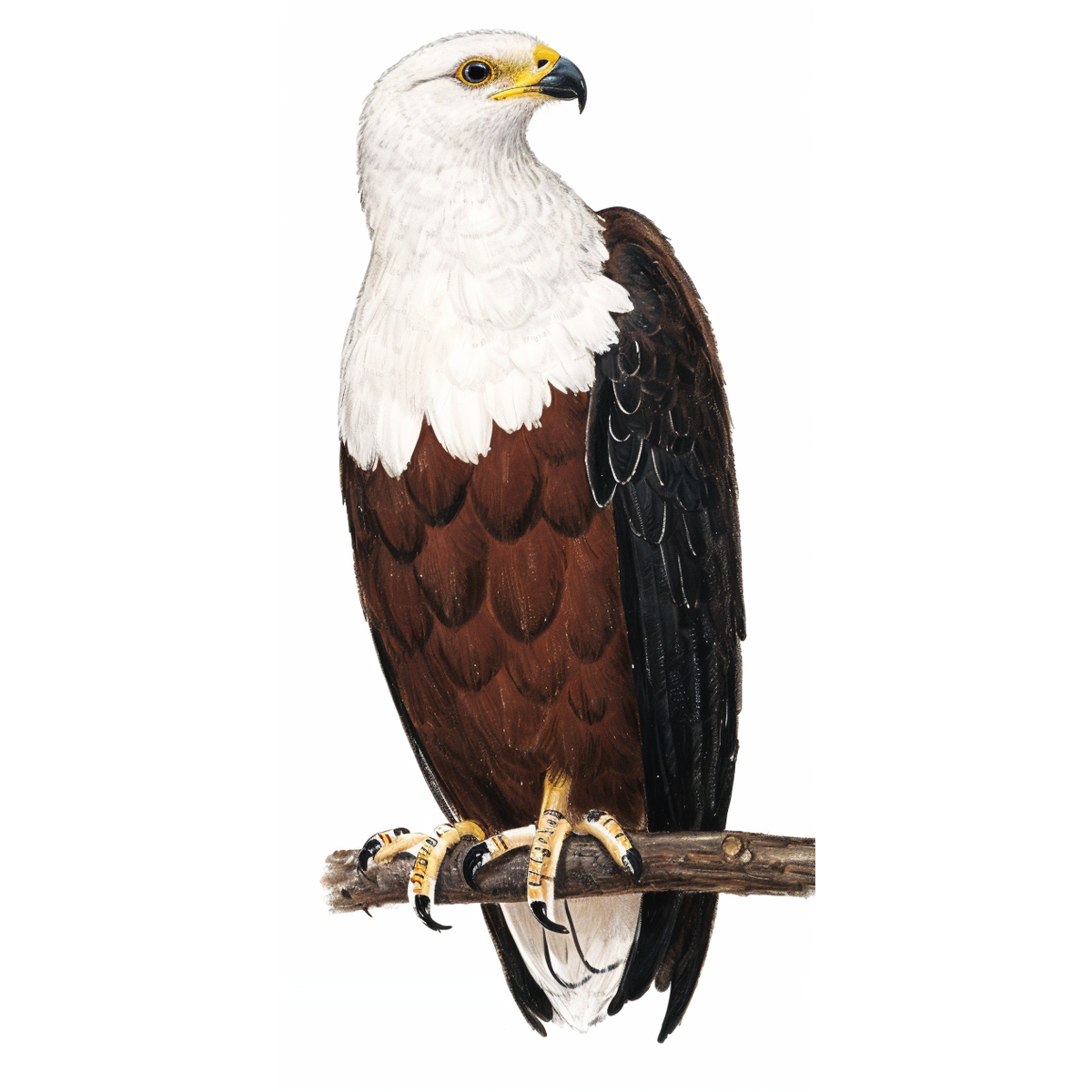
Wetlands. Wings dark brown; belly chestnut-brown; head, breast and mantle white; cere and legs yellow.
Eagles
LC
Not Endemic
African Fish Eagle

Description

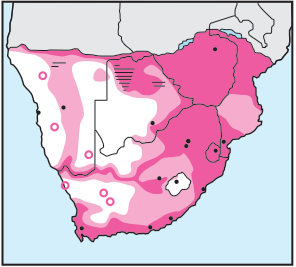
Fairly common resident. Well known and distinctive. In flight, identified by combination of broad wings and short, white tail cf. [Palm-nut Vulture]. Very young, immature, fledged birds (a) (see also underwings); easily mistaken for other brown eagles or [Osprey], but pale demarcation line of white upper breast usually detectable. After one year, plumage pattern begins to resemble that of adult, although heavy brown streaks still remain on the white (b) up to 5th yr. The ringing, far-carrying call, in the air or while perched, is ‘weee-ah, hyo-hyo-hyo’, while tossing the head backwards, the male’s voice more shrill than the female’s. Pairs involved in aerial talon gripping during courtship. Usually occurs in territorial pairs at inland waters and rivers and seashores in remoter regions. Conspicuous and noisy, mainly hunt from a perched position swooping down to catch prey. Feed primarily on fish but also carrion, small mammals and reptiles often pirates from other birds, even recorded scavenging from crocodiles. Nest of sticks on top of trees near water. 1,8-3,5 kg.

Quick Facts

size

Size

63-73 cm - L

behaviour

Names

A: Visarend
Z: iNkwazi
Ss: Ntsuhlapi
G: Schreiseeadler

Bird Family

Distinguished from all other raptors by their fully feathered legs. Prey is killed either by impact or by crushing it in the eagle's powerful talons; flesh is torn by the well-hooked bill. Most eagles hunt while flying, wheeling effortlessly in rising warm air, and are seldom seen perched in fair weather.


Dark Brown
Wetlands

Distribution

Gallery

behaviour

Behaviour

Breeding

Breeding

Habitat

Habitat

Usually occurs in territorial pairs at inland waters and rivers and seashores in remoter regions.


behaviour

Best Locations

0 Cart