

Grey-headed Kingfisher

Halcyon leucocephala

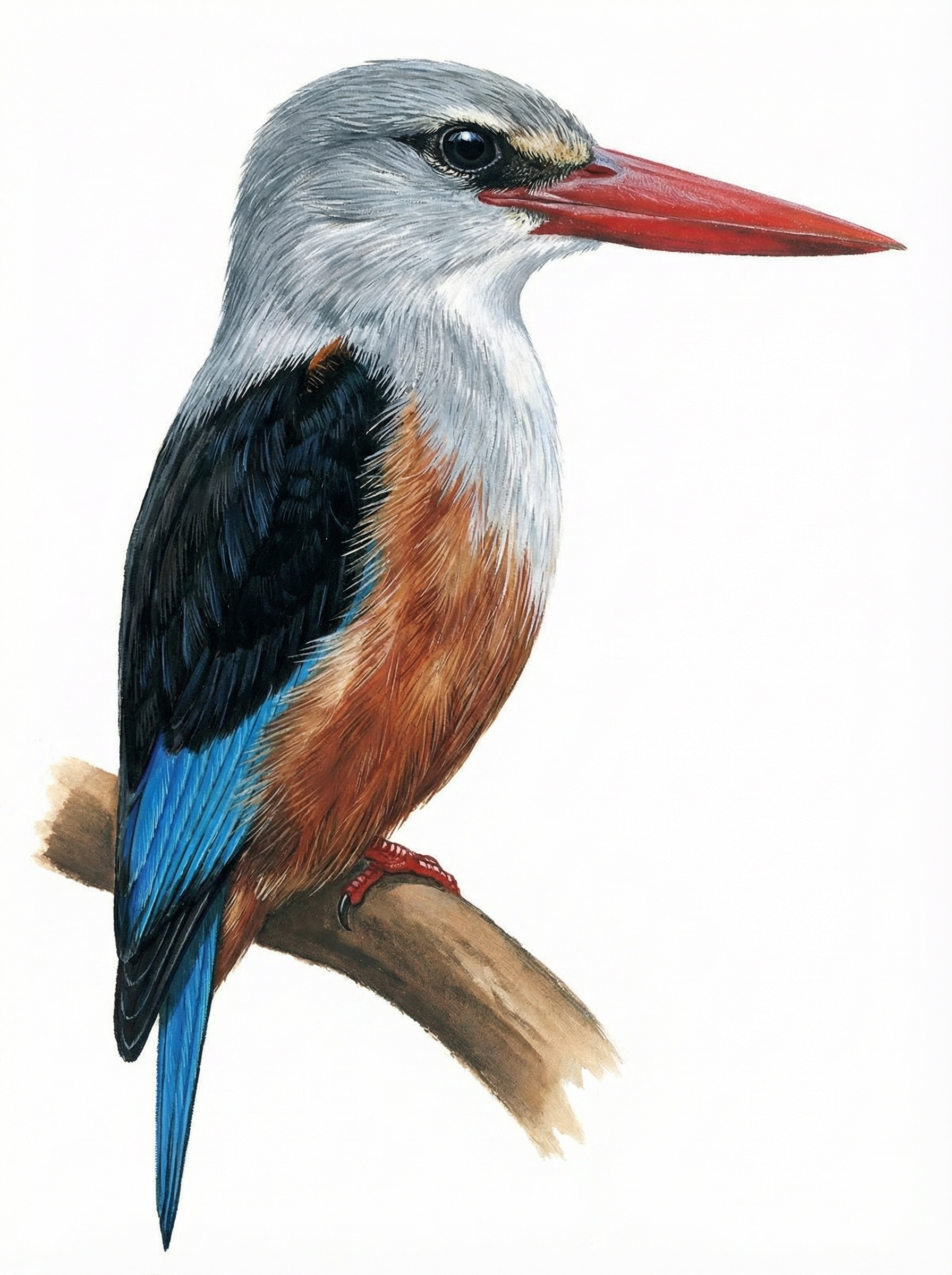
Mixed woodland. Back, tail and wings royal blue; wing coverts black; head and mantle grey; belly chestnut; bill red.
Kingfishers
LC
Not Endemic
Grey headed Kingfisher Newman's Birds

Description

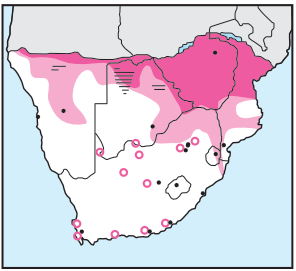
Uncommon to locally common summer resident and visitor. Identified by grey head and mantle, chestnut belly and deep blue, almost purple wings and tail; cf. [Brown-hooded Kingfisher]. Not very vocal, the call a weak, descending ‘chi-chi-chi-chi’. An insectivorous kingfisher, found singly or in pairs in woodland or mixed bushveld Sep–Apr. Occasionally catches fish.

Quick Facts

size

Size

20 cm - M

behaviour

Names

A: Gryskopvisvanger
Ss: Seinodi Sa Hlohoputswa
G: Graukopfliest

Bird Family

Fish- or insect-eating birds with short legs and long, dagger-like bills. The fish-eating species plunge-dive for their food from a perch or, in some cases, after hovering. Fish are beaten into immobility before being swallowed head-first. The insectivorous species hunt from a low branch, usually away from water, where they watch for and seize insects on the ground. They breed in holes in banks or trees. Immatures resemble adults but are duller.


Blue
Savanna Bushveld

Distribution

Gallery

behaviour

Behaviour

Breeding

Breeding

Habitat

Habitat

An insectivorous kingfisher, found singly or in pairs in woodland or mixed bushveld Sep–Apr.

behaviour

Best Locations

0 Cart