
Identification & Key Features
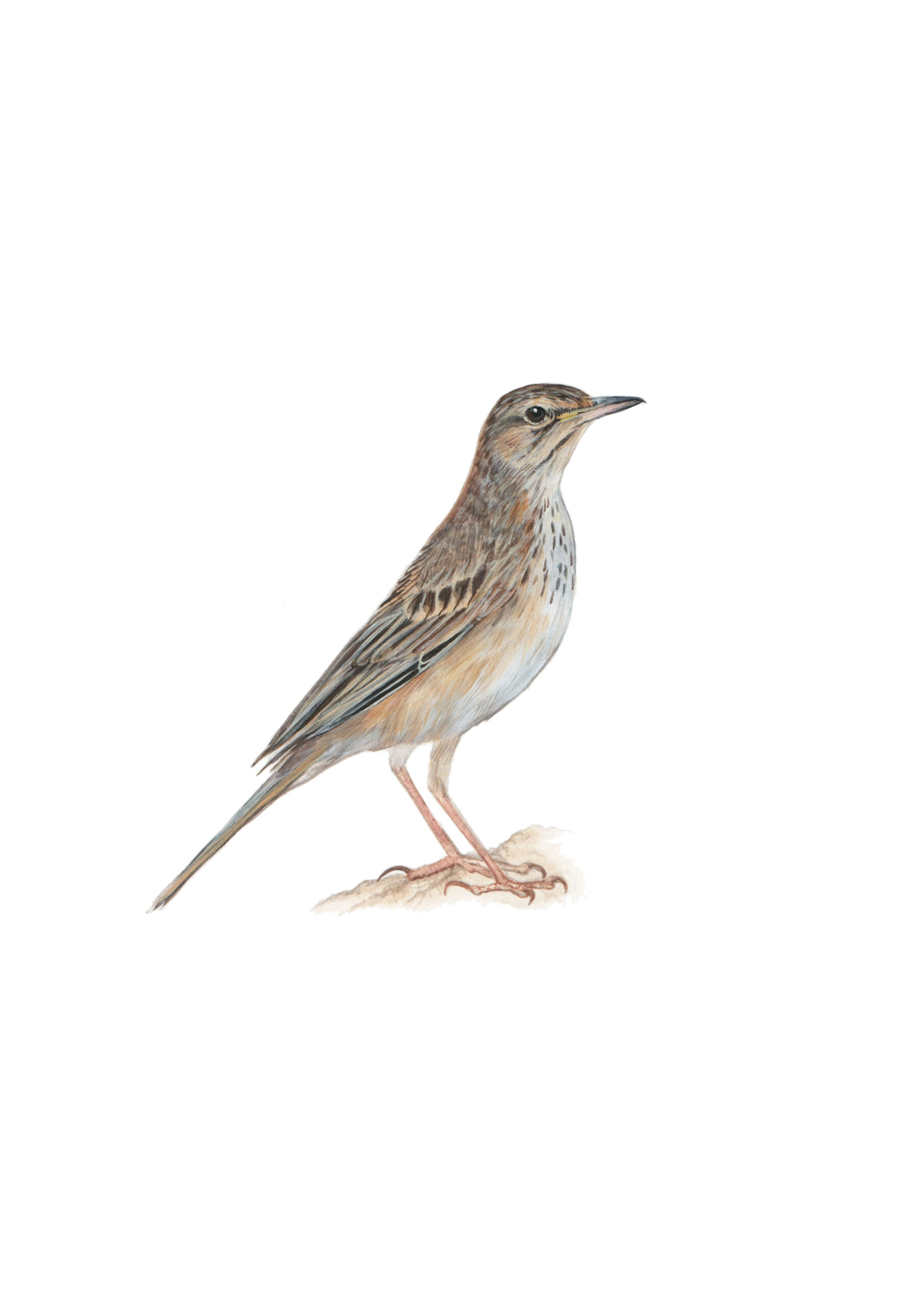
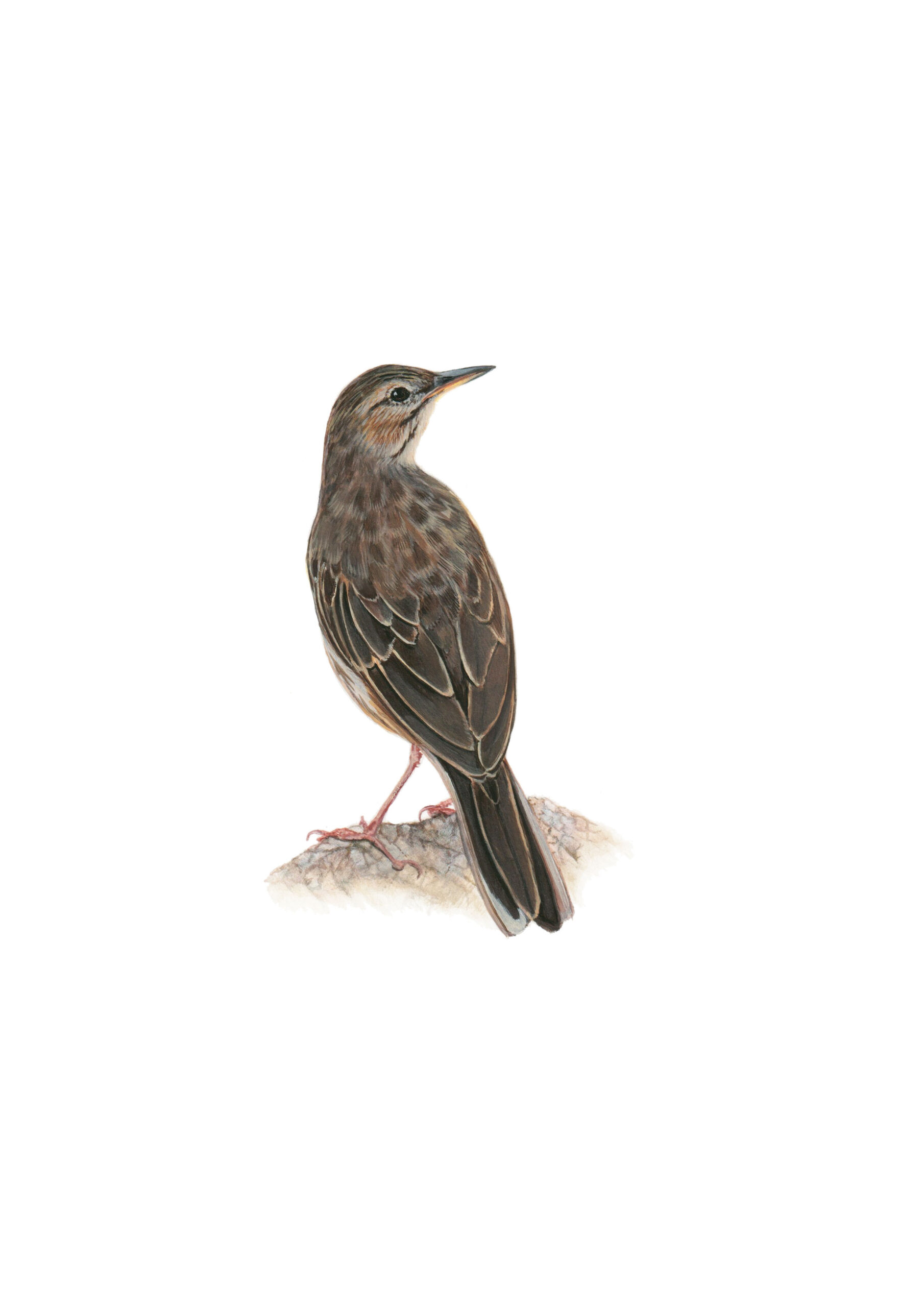
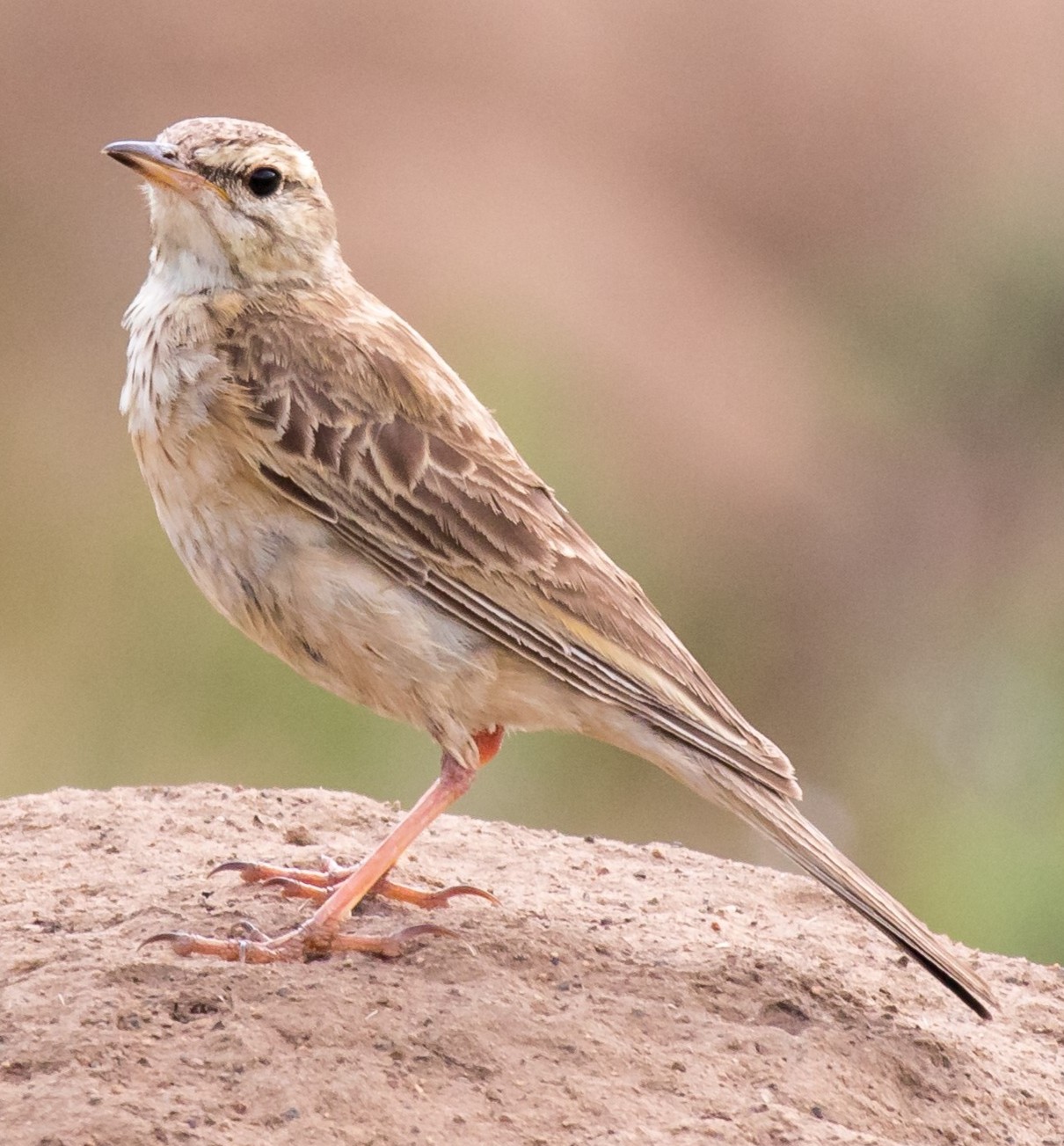
Nicholson's Pipit is a large, robust pipit strongly associated with rocky, mountainous terrain. It is often confused with other pipits, but is distinguished by its larger size, bulkier build, and specific habitat preference. Its plumage is highly variable and cryptic, typically matching the colour of the local rock and soil, ranging from greyish to rich rufous-brown.
- ▶ Plumage: Heavily streaked upperparts, buffy underparts with bold breast streaking.
- ▶ Structure: Large bill, stocky body, and an upright stance.
- ▶ Habitat: Almost exclusively found on rocky slopes and stony ground.
- ▶ Call: A loud, piercing "chree-chree" call, often delivered from a prominent perch.
Conservation Status
Least Concern
(IUCN 3.1)
Average Length
18cm
Average Weight
30g
Geographic Distribution
Endemic to Southern Africa, its range is closely tied to mountainous and hilly regions, such as the Great Escarpment, in South Africa, Namibia, and southern Botswana.
Fragmented
Mountain Ranges
Mountain Ranges
Simplified map showing habitat-specific range in Southern Africa.
Primary Habitat Types
A true habitat specialist, this pipit avoids grasslands and is almost always found in stony, rugged environments.
Diet Composition
It forages on the ground between rocks and boulders, seeking out a variety of arthropods adapted to its arid environment.
Reproductive Cycle
Nicholson's Pipit builds its nest on the ground, typically concealed under a rock overhang or within a dense tuft of grass growing in a rocky crevice. Breeding season is linked to spring and summer rainfall.
①
Nest Building
Grass cup sheltered by a rock.
→
②
Egg Laying
Clutch size of 2-4 eggs.
→
③
Incubation
Lasts approximately 13-15 days.
→
④
Fledging
Chicks leave the nest at ~14 days.