

Black Friday: FREE shipping on 2 or more books – a signed copy for you, one to give. Ends 30 Nov.Black Friday: FREE shipping on 2+ books · Ends 30 Nov Shop now →

White-eared Barbet

Stactolaema leucotis

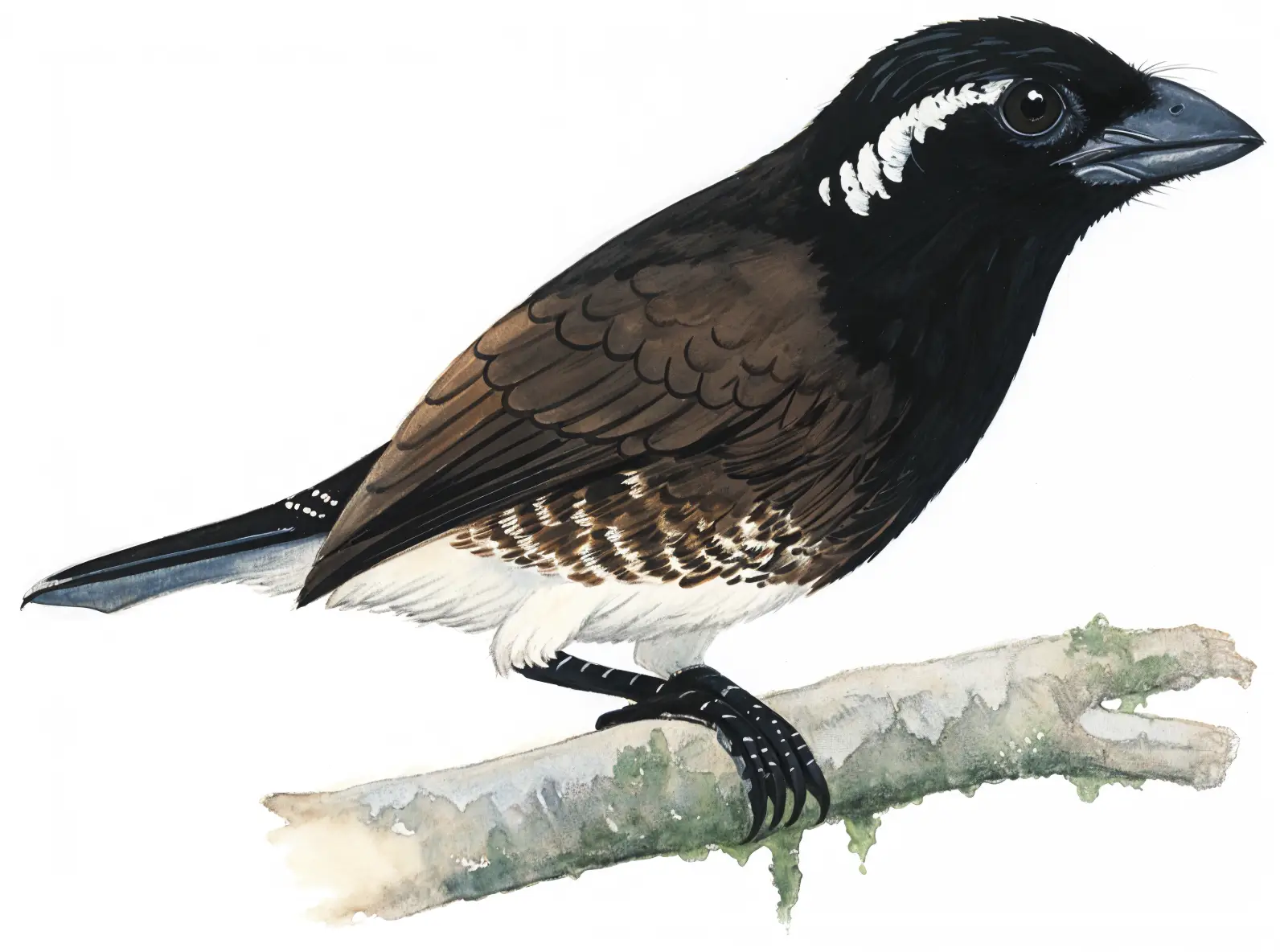
Coastal forest fringes. Dark brown with white ear-stripes and underbelly.
Barbets, Tinkerbirds
LC
Not Endemic
White eared Barbet AI

Description

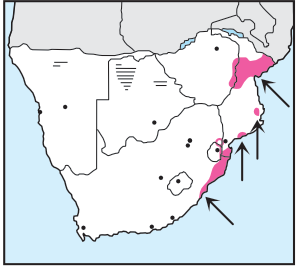
Common resident. Identified by pied appearance, prominent white ear-stripe and white belly. The common call is a loud ‘trreee, trrree-trree-trree- trree-trree’, which may be uttered by several birds simultaneously. Usually occurs in noisy, conspicuous groups of two to six in coastal and lowland forest canopies and fringes, riverine forests and moist woodland where fig trees are fruiting.

Quick Facts

size

Size

18 cm - S

behaviour

Names

A: Witoorhoutkapper
Z: iNtunjana
Ss: Mankotlo Wa Tsebesweu
G: Weißohr-Bartvogel

Bird Family

Stout-billed, robust and often colourful relatives of the woodpeckers, with loud, characteristic calls. They feed on fruits and insects and excavate nest-holes in trees. The smaller species are called tinkerbirds from the likeness of their calls to the metallic sound of a hammer on an anvil. Immatures are duller than adults.


Dark Brown
Forest

Distribution

Gallery

behaviour

Behaviour

Breeding

Breeding

Habitat

Habitat

Usually occurs in noisy, conspicuous groups of two to six in coastal and lowland 'forest' canopies and fringes, riverine 'forest's and moist woodland where fig trees are fruiting.


behaviour

Best Locations

0 Cart