
Ruff

Calidris pugnax

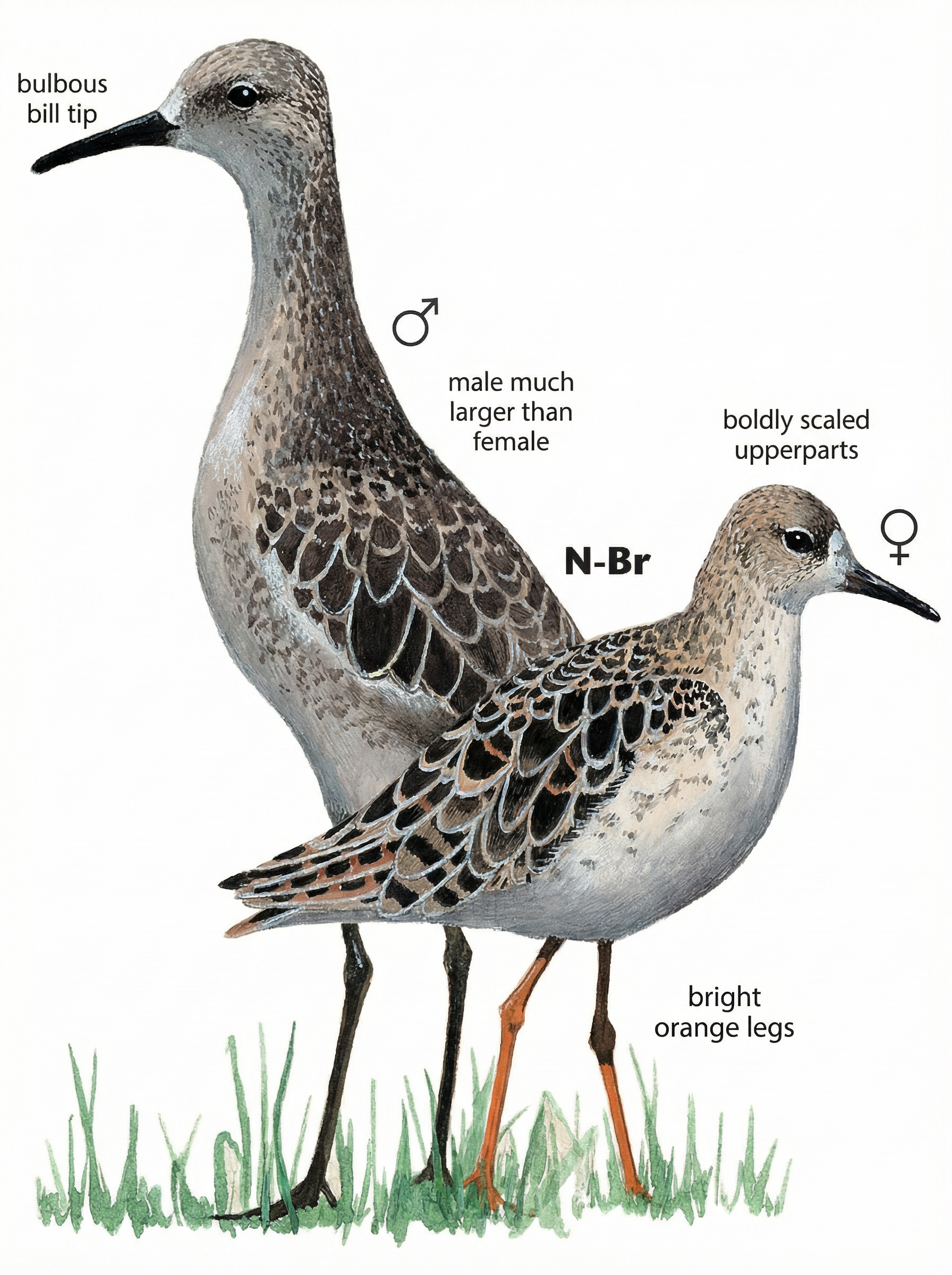
Wetlands. Orange legs in adult, dark in immature. Head and rear of neck dappled light brown; back and wings dark brown; all feathers boldly edged white; below white.
Allied Waders, Sandpipers
LC
Not Endemic
Ruff

Description

Abundant summer visitor. Male much larger than female (known as a reeve). Told by short, slightly decurved bill with slightly bulbous tip, featureless face, except for a small white patch at the base of the bill, and boldly scaled or mottled upper parts. Legs orange in adult, grey-green in immature. Male may be seen in spring or autumn with traces of its breeding plumage. In flight it shows white oval patches on sides of dark tail. Birds in a flocks may call ‘chit’ in a twittering chorus. Occurs singly, in groups or in large flocks in shallows of coastal and inland waters, flooded fields and farmlands. Takes flight in dense flocks.

Quick Facts

size

Size

24-30 cm - M

behaviour

Names

A: Kemphaan
Z: unogqabakazi
Ss: Seyalelebopo Sa Motlwenya
G: Kampfläufer

Bird Family

A group of small birds usually found along shorelines and wading in shallow water. They usually have longish legs and bills for probing mud, feeding on small insects and invertebrates. Species breed in northern regions and during this time the males assume richly coloured plumage. They migrate south in drab non-breeding plumage at the start of the southern hemisphere summer. Illustrations depict the species in non-breeding plumage, unless otherwise indicated.

Speckled
Wetlands

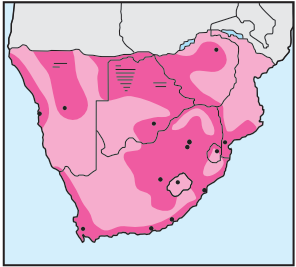
Distribution

Gallery

Ruff
behaviour

Behaviour

Breeding

Breeding

Habitat

Habitat

Occurs singly, in groups or in large flocks in shallows of coastal and inland waters, flooded fields and farmlands.

behaviour

Best Locations

0 Cart