


18-20 cm - S

A: Gryskopspeg
Z: isigqobhamithesiluhlaza
Ss: Kgatajwe Ya Hlohoputswa
G: Goldrückenspecht

Small, robust birds with straight, pointed bills, stiff tails and zygodactylous feet (the inner and outer toes are directed backward and the two central toes forward). They glean insects and their larvae from within crevices in trees and from beneath bark by tapping with their bills to loosen or chip the wood and inserting their long sticky tongues. While feeding, they use the tail as a prop. They normally occur in pairs and excavate holes in trees for nesting, these frequently being used in turn by other hole-nesting species. Many woodpeckers are very similar in appearance. They are best identified by head and breast markings plus call. The aberrant Ground Woodpecker is entirely terrestrial and nests in holes in banks.


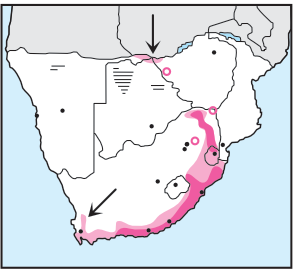


Pairs occur in lowland and montane 'forest' and along adjacent forested streams.