

Olive Sunbird

Cyanomitra olivacea

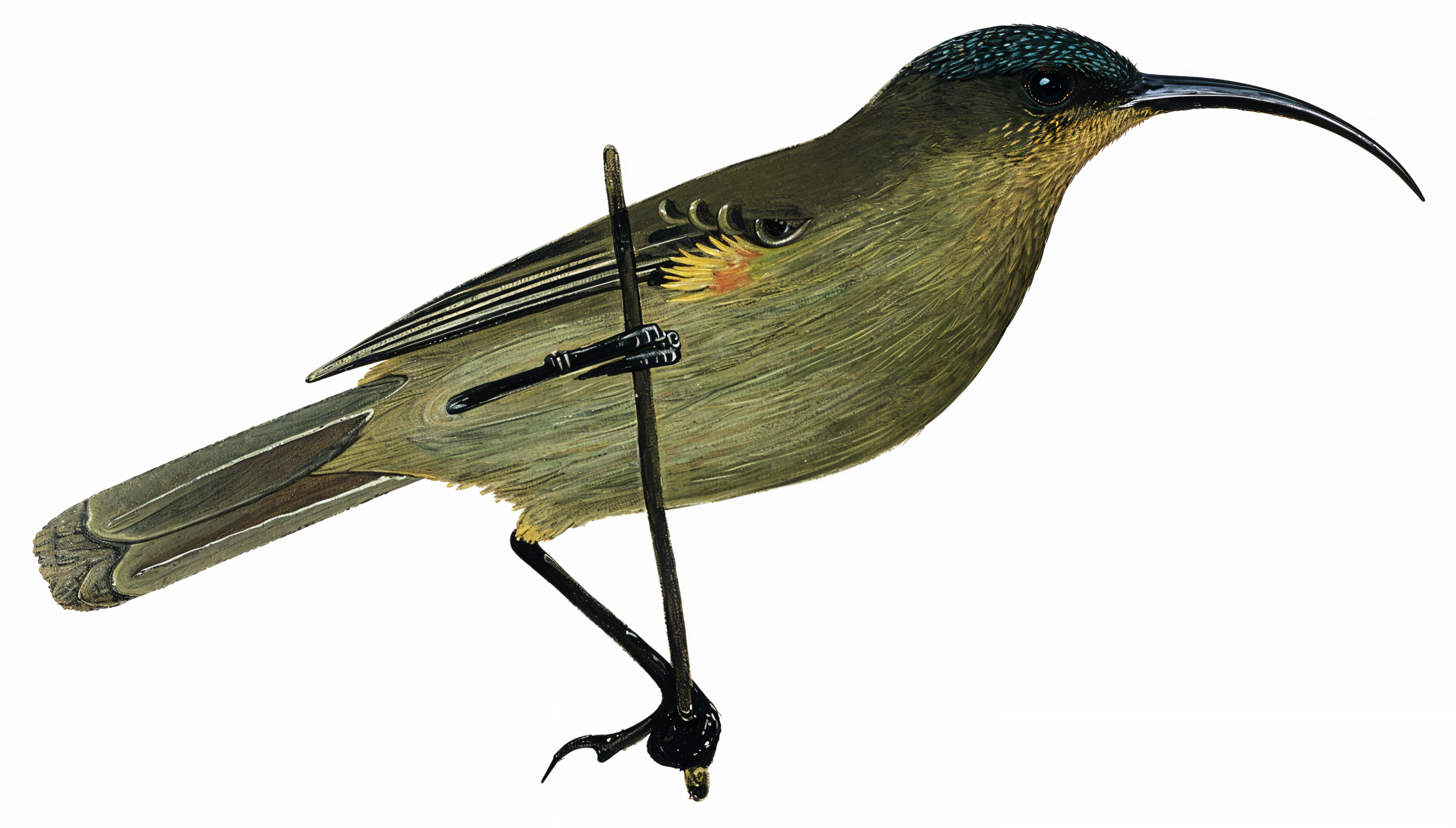
Lowland forests. A large sunbird. Dull olive-green, darker above, paler below.
Sunbirds
LC
Not Endemic
Olive Sunbird Newman's Birds

Description

Common resident. Male lacks the scarlet breast of [Scarlet-chested Sunbird], appearing all-black, but at close range and in good light the iridescent green cap plus violet throat, shoulder and rump patches can be seen. Female is identified by large size, creamy underparts and dusky throat with pale-yellow moustachial streak. The call, often given in flight, is ‘tschiek’ or ‘zit’; also utters a stuttering ‘chichichichi’. The male utters a pleasant, subdued warbling song for long periods while concealed in foliage. Occurs singly or in pairs in woodland, forest and riverine forest fringes, less often in bushveld; frequently in suburbia. Lively and conspicuous.

Quick Facts

size

Size

13-15 cm - S

behaviour

Names

A: Olyfsuikerbekkie
Z: incwincweluhlaza
G: Olivnektarvogel

Bird Family

Small, insectivorous and nectar-drinking birds with decurved bills adapted to flower-probing. Males have iridescent plumage and yellow, orange or red tufts on the sides of the breast (pectoral tufts) that are displayed in excitement. Some males undergo an annual eclipse when they adopt drab, non-breeding plumage resembling the normal plumage of the female. Immatures are like females, often with a dark throat. Their flight is swift and erratic, males spending much time chasing females and other males. They gather in numbers when favoured nectar-rich plants are in blossom.


Green
Forest

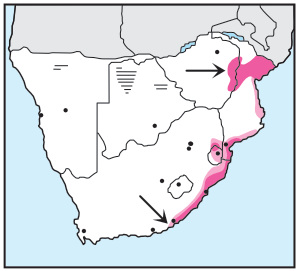
Distribution

Gallery

Olive Sunbird Newman's Birds
behaviour

Behaviour

Breeding

Breeding

Habitat

Habitat

Occurs singly or in pairs in woodland, 'forest' and riverine 'forest' fringes, less often in bushveld; frequently in suburbia.


behaviour

Best Locations

0 Cart