
Cape Parrot

Poicephalus robustus

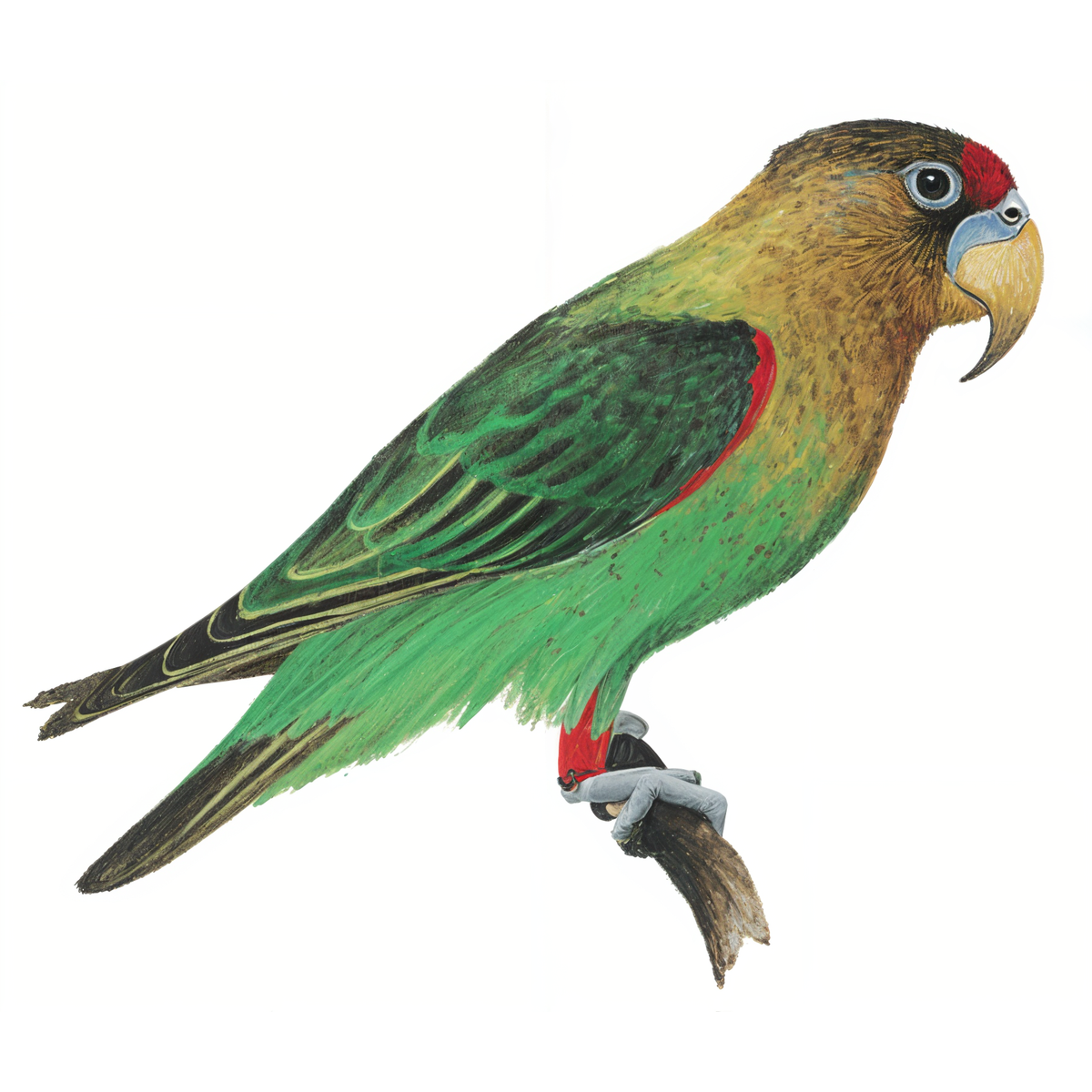
Forests. Green body and wings; yellow-brown (or grey) head and neck; orange-red forehead and shoulders.
Lovebirds, Parrots
EN
Rare Endemic
Cape Parrot AI

Description

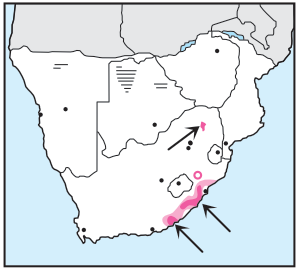
Uncommon endemic resident. Large, mostly green parrot with yellow-brown head and neck and orange-red forehead, shoulders and leg feathers, these colours often absent or vestigial in immatures. In flight, shows pale-green back and rump. An evergreen forest species occurring in pairs and small flocks in a broken strip in the eastern interior. Small flocks often fly long distances daily to reach fruiting trees, returning at night to favoured forest roosts. Often located by call as it flies overhead. An endangered species.

Quick Facts

size

Size

35 cm - M

behaviour

Names

A: Woudpapegaai
Z: isiKhwenene
Ss: Heka Ya Moru
G: Kappapagei

Bird Family

A well-known group of gregarious birds with hooked bills. They use their feet and bills to clamber about trees. Parrots (including parakeets) feed mainly in trees on fruits and kernels, the latter obtained by cracking the hard pericarps. Lovebirds feed on seeds, grain, berries and flowers, frequently foraging on the ground. All are highly social and utter shrill shrieks.

Green
Forest

Distribution

Gallery

Cape Parrot AI
behaviour

Behaviour

Breeding

Breeding

Habitat

Habitat

An evergreen 'forest' species occurring in pairs and small 'flocks' in a broken strip in the eastern interior. Small flocks often fly long distances daily to reach fruiting trees, returning at night to favoured forest roosts.


behaviour

Best Locations

0 Cart