

Cape Batis

Batis capensis

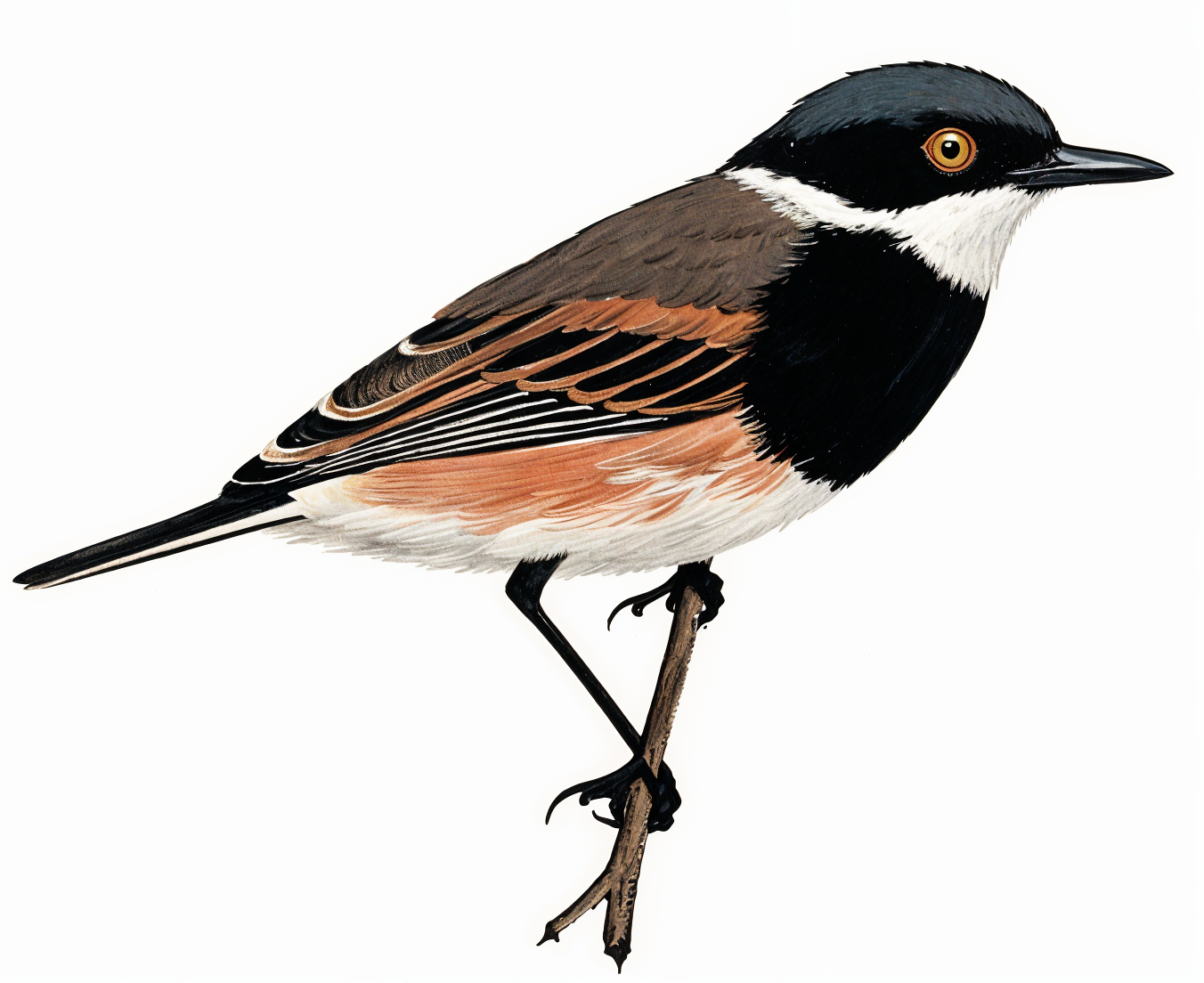
Forest fringes. Male has a broad black breast-band and rufous flanks. Female has rufous throat, flanks and breast-band.
LC
Near Endemic
Cape Batis AI

Description

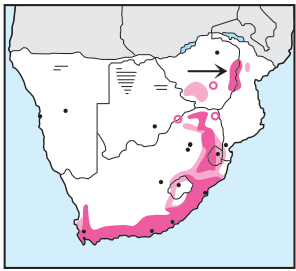
Common near-endemic resident. The most heavily marked Batis. Male has a very broad black breast-band and rufous flanks; female rich rufous breast-band, throat and flanks. Both have rufous on wing coverts; eyes yellow when not breeding. Has a grinding ‘prrritt, prrritt, prrritt’ alarm note; other calls variable: a monotonous ‘keep, keep, keep…’, a grating ‘WEE-warrawarra’ and a soft ‘foo-foo-foo-foo…’. Occurs in pairs and small parties in forest, forested kloofs, fynbos, succulent scrub and well-wooded suburban gardens; in the north confined to montane forests.

Quick Facts

size

Size

12-13 cm - S

behaviour

Names

A: Kaapse Bosbontrokkie
Z: uDokotela
Ss: Swamahlaku-Sa-Kapa
G: Kapschnäpper

Bird Family

Small leaf-gleaning flycatchers of similar appearance, characterised by grey caps and upperparts, black masks, black or rufous breast-bands and varying amounts of rufous coloration elsewhere. Immatures are dull versions of the adults. They are often found in bird parties. When alarmed they fly about with whirring wings.


Collars & Breast Bands
Forest

Distribution

Gallery

Cape Batis AI
behaviour

Behaviour

Breeding

Breeding

Habitat

Habitat

Occurs in pairs and small parties in 'forest', forested kloofs, 'fynbos', succulent scrub and well-wooded suburban gardens; in the north confined to montane forests.


behaviour

Best Locations

0 Cart