

African Wood Owl

Strix woodfordii

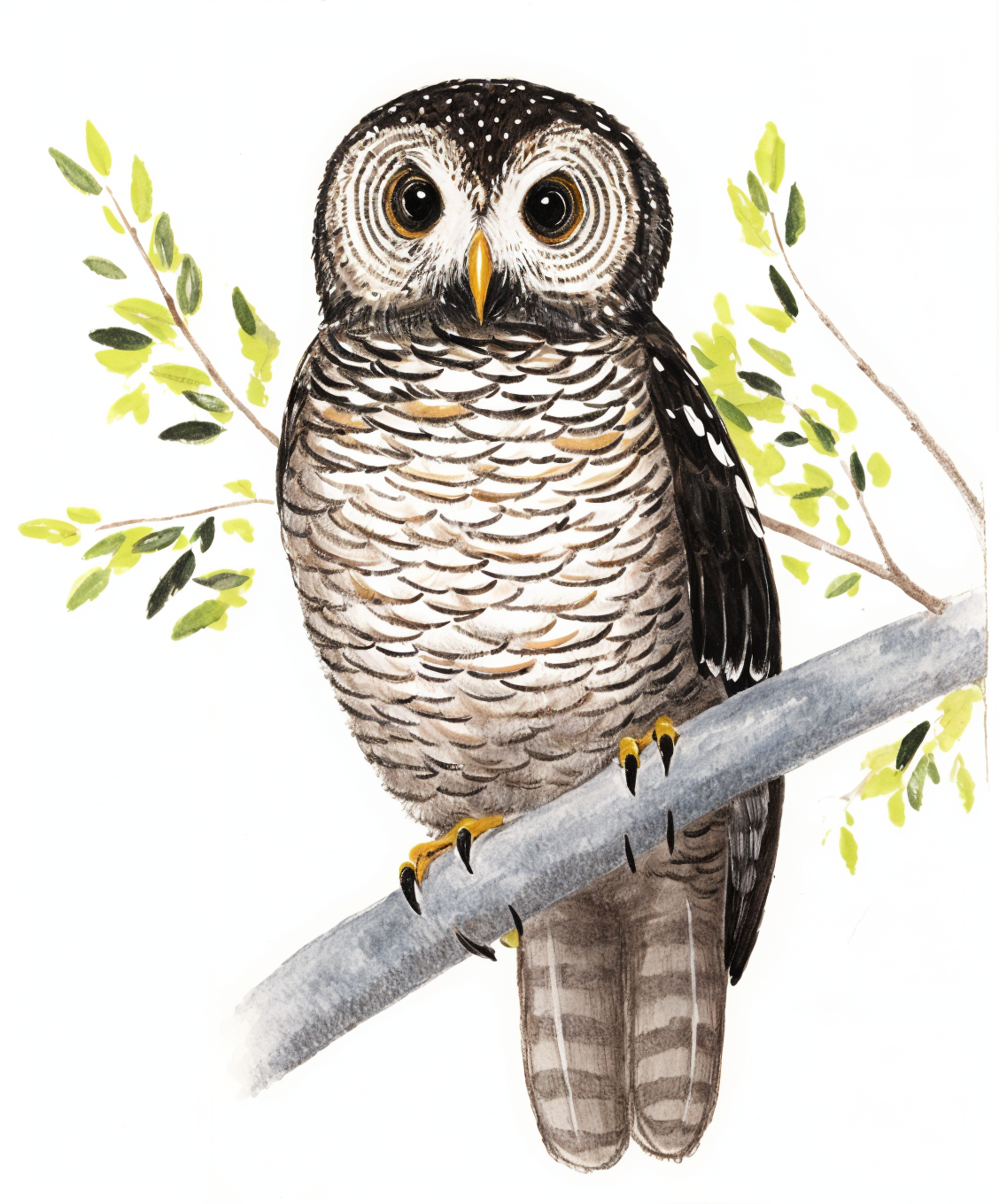
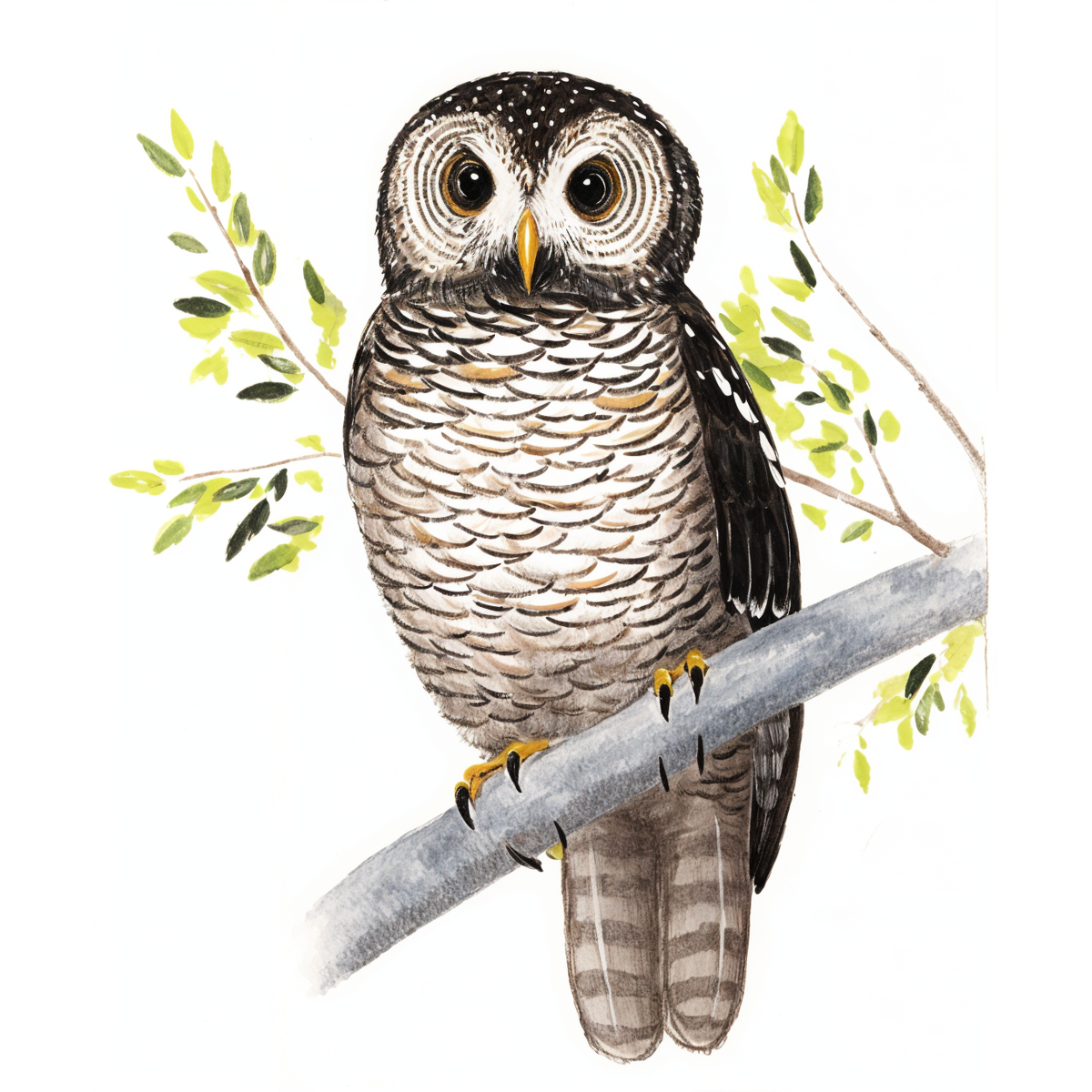
Forests. Dark brown above including ­surround of facial disc; finely barred brown on whitish underparts; no ‘ear’ tufts.
Owls
LC
Not Endemic
African Wood Owl AI

Description

Fairly common, localised resident. Told by yellow bill, lack of ear-tufts, large, pale, spectacle-like eye-orbits surrounding dark eyes and barred underparts. Immature has smaller eye-orbits and darker colouring. Male calls a rapid ‘HU-hu, HU-hu-hu, hu-hu’; female replies with a higher-pitched ‘whoo’. Pairs and family groups occur in forests, well-developed riverine forest and exotic plantations. During the day roosts in large trees close to the tree trunks.

Quick Facts

size

Size

30-36 cm - M

behaviour

Names

A: Bosuil
Z: uMabhengwane
Ss: Morubisi Wa Molomosehla
G: Woodfordkauz

Bird Family

Nocturnal, erect-standing birds of prey characterised by large, rounded heads, large forward-facing eyes set in a flattened face and feathered legs (except for Pel's Fishing-Owl). Some have feather adornments on their heads that resemble ears, but they are not used for hearing. Immatures are usually darker and fluffier than adults.

Dark Brown
Forest

Distribution

Gallery

African Wood Owl AI
behaviour

Behaviour

Breeding

Breeding

Habitat

Habitat

Pairs and family groups occur in forests, well-developed riverine 'forest' and exotic plantations.


behaviour

Best Locations

0 Cart