

African Marsh Harrier

Circus ranivorus

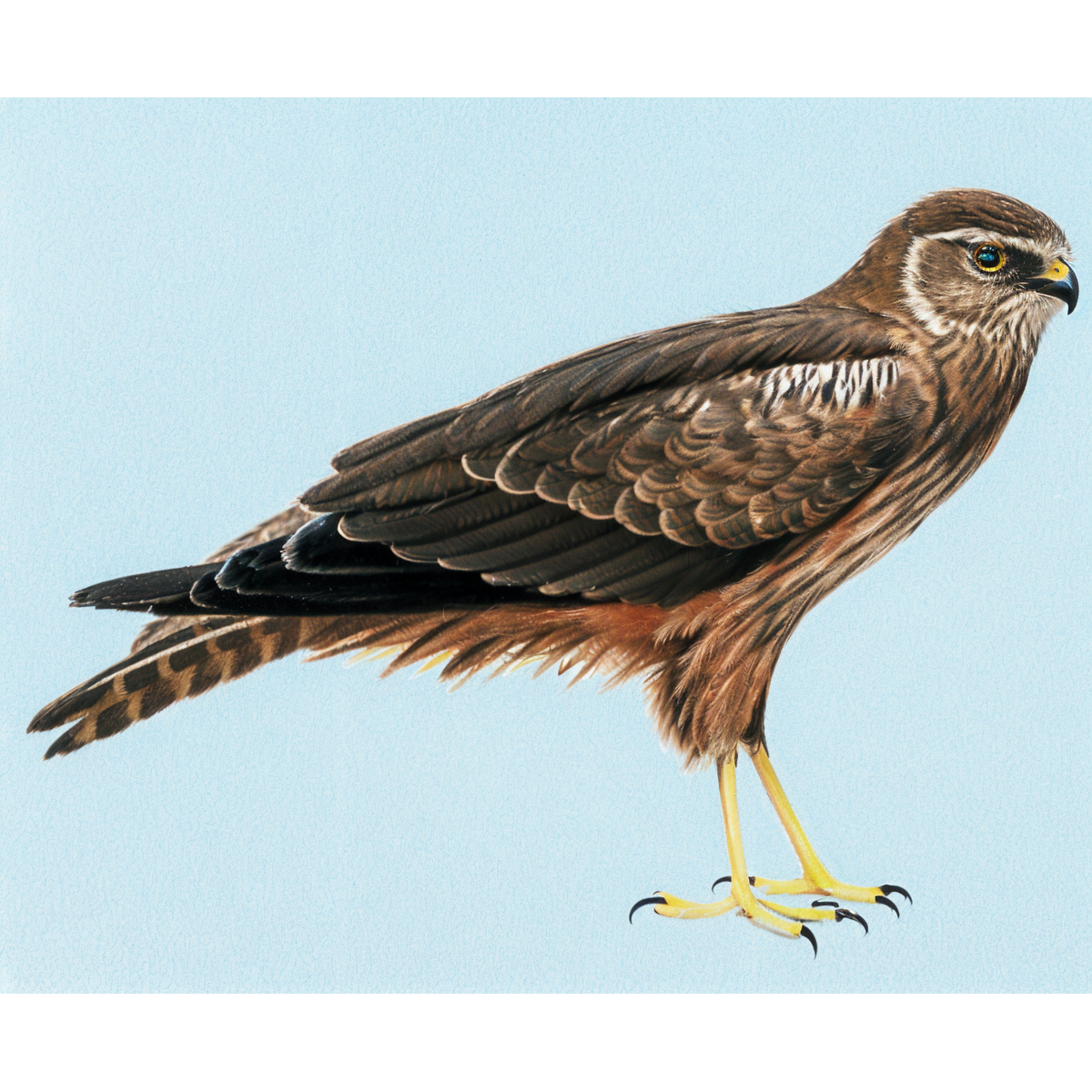
Marshlands. Dark brown, long-winged hawk; paler brown below; underwings well barred; flies low.
Harriers, Marsh Harriers
EN
Not Endemic
African Marsh Harrier AI

Description

Common resident with fragmented distribution. Differs from uncommon [Western Marsh Harrier] in darker, more richly coloured underparts, but old birds may become whiter about the head. Typically more heavily barred on the underwings and tail than that species; also more richly coloured on underparts than female of [Pallid Harrier] or [Montagu’s Harrier] ; tail less obviously barred above. Immature has diagnostic pale breast-band. Call is a whistled ‘phseew’. Breeding early spring/summer in southern regions to late summer/autumn farther north in relation to rainfall. Usually occurs singly, flying over marshland and reed beds, occasionally over cultivated fields exhibiting a nomadic tendencies. Feeds on small rodents, birds and nestlings to amphibians and fish Rests on the ground, sometimes on a fence post. 350 -600 g

Quick Facts

size

Size

44-49 cm - L

behaviour

Names

A: Afrikaanse Vleivalk
Z: umamhlangenonsundu
Ss: Mmankgodimohlaka Wa Afrika
G: Afrikanische Rohrweihe, Froschweihe

Bird Family

Long-winged, long-tailed, long-legged hawks that inhabit grassland or marshes. They usually fly low with leisurely, buoyant flight, head bent downwards and legs dangling slightly, bouts of flapping alternating with glides and wings held in a shallow ‘V'-shape above their bodies. They settle on the ground or perch on posts, less often in trees. Silent birds.

Collars & Breast Bands
Wetlands

Distribution

Gallery

African Marsh Harrier AI
behaviour

Behaviour

Breeding

Breeding

Habitat

Habitat

Usually occurs singly, flying over marshland and reed beds, occasionally over cultivated fields exhibiting a nomadic tendencies.

behaviour

Best Locations

0 Cart