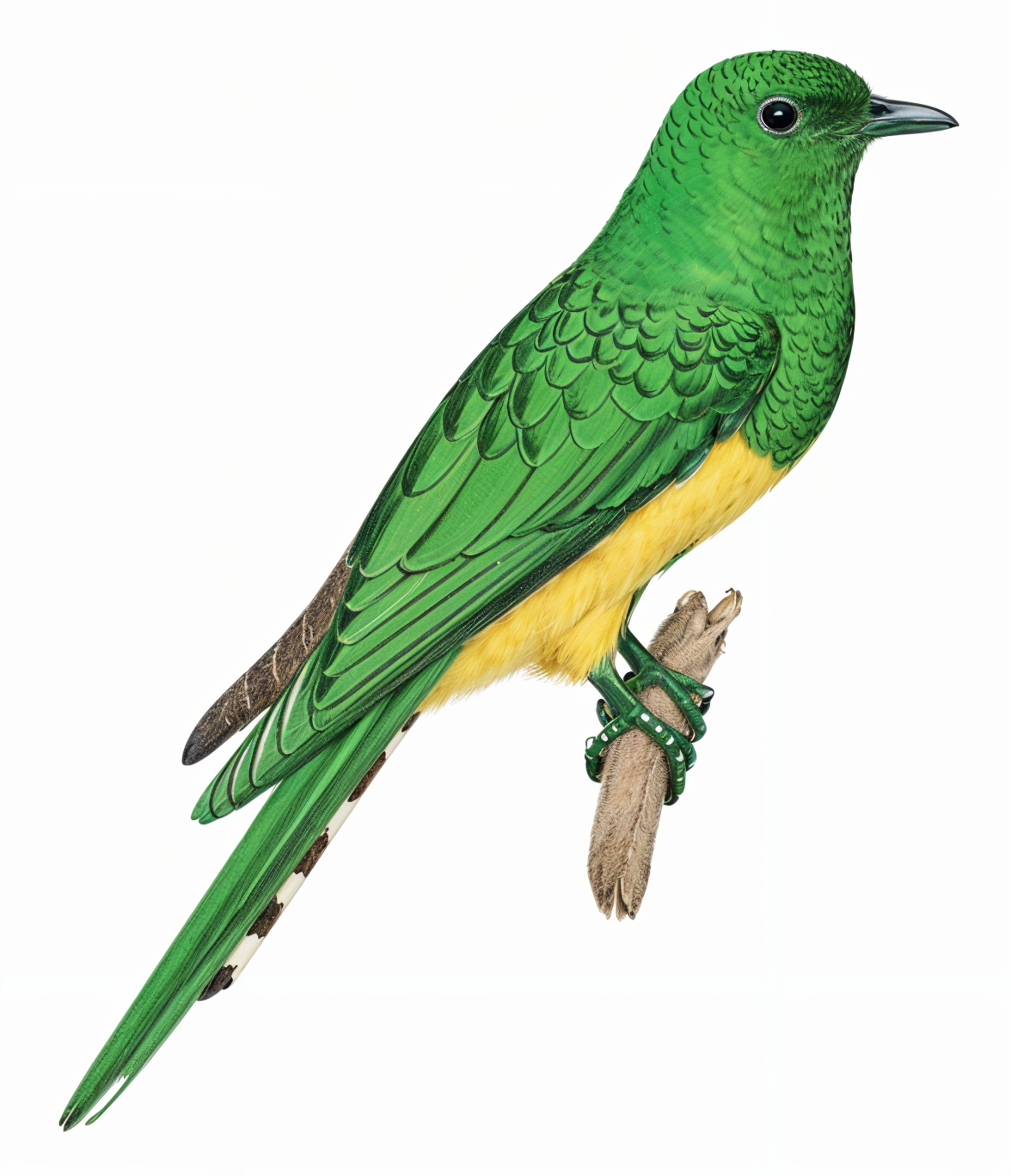

African Emerald Cuckoo

Chrysococcyx cupreus

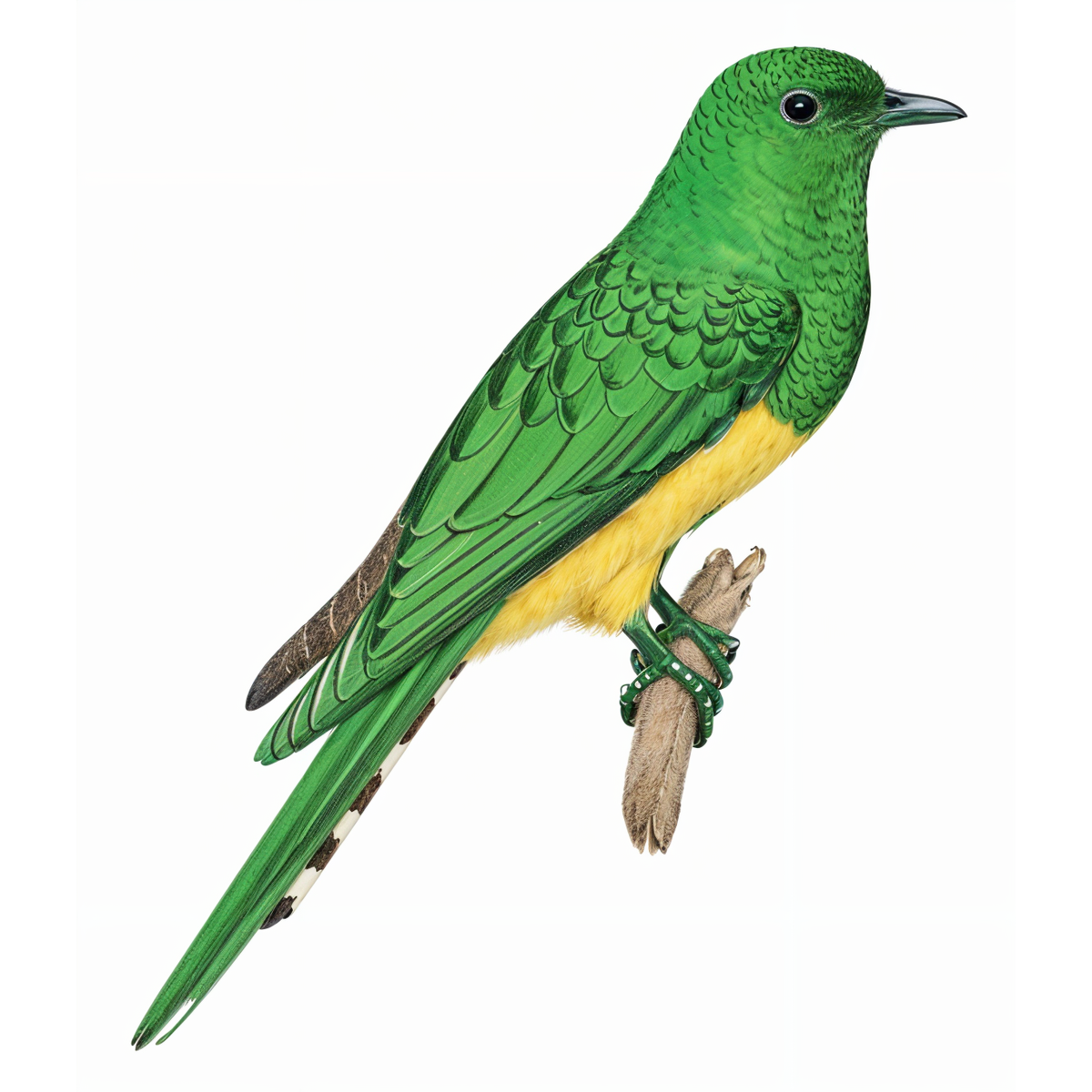
Forests. Male bright green above, beak to tail, plus breast; belly ­yellow; eyes dark; beak green. Female brown above; white below with heavy green banding overall.
Cuckoos
LC
Not Endemic
African Emerald Cuckoo AI

Description

Fairly common summer resident. Male identified by yellow belly and lack of any white on the head. Female distinguished from female of [Klaas’s Cuckoo] by the absence of a white mark behind the eye, much more bronze upper parts, heavily barred underparts, dark eyes and bluish bill and feet. The call is a clear ‘Pretty, Geor-gie’. Occurs in the upper stratum of forests and valley bush. Parasitises forest robins, warblers and flycatchers.

Quick Facts

size

Size

20 cm - M

behaviour

Names

A: Mooimeisie
Z: uBantwanyana
Ss: Ntetekeng Ya Mpasehla
G: Smaragdkuckuck

Bird Family

Cuckoos are brood parasites, laying their eggs in the nests of other birds, and the majority are absent from southern Africa during the period March-September. The related coucals are larger, more robust and mainly sedentary birds that build their own nests and rear young in the conventional manner.

Green
Forest

Distribution

Gallery

African Emerald Cuckoo AI
behaviour

Behaviour

Breeding

Breeding

Habitat

Habitat

Occurs in the upper stratum of forests and valley bush.

behaviour

Best Locations

0 Cart